Institute for Public Health Innovation (IPHI) Logo

A Guidebook for Developing Public Health Communities of Practice

A Guidebook for Developing Public Health Communities of Practice

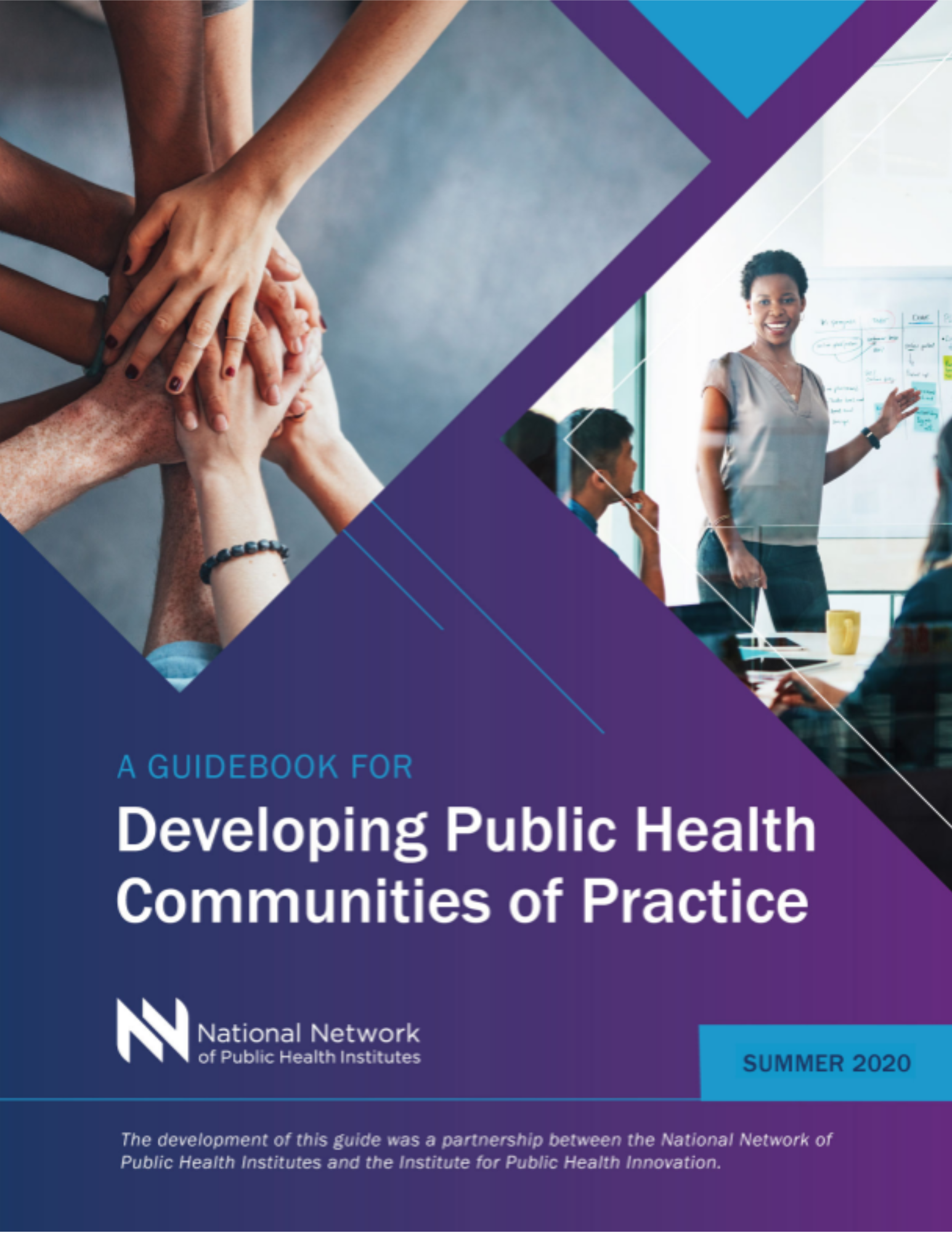
The Institute for Public Health Innovation (IPHI), in partnership with the National Network of Public Health Institutes, created this guidebook to explain how Communities of Practice (CoPs) have emerged as a powerful social learning model for building collaboration, shared expertise, and practical problem-solving across fields, including public health.

CoPs bring together committed practitioners who learn from one another through sustained interaction. The National Network of Public Health Institutes (NNPHI) applies this model to strengthen public health training and practice, offering a guidebook with frameworks and tools to launch CoPs. The rationale is grounded in urgent national calls, including Public Health 3.0 and the CDC’s workforce strategy, which emphasize workforce capacity, continuous learning, and equity. As public health faces an expanding scope, persistent inequities, uneven workforce capacity, rapid-response demands, and the limits of traditional training, CoPs offer a practical, technology-enabled approach to continuous, collaborative learning and the effective sharing and implementation of solutions.

To download the report, click Here

To view the report online, visit: Here

 

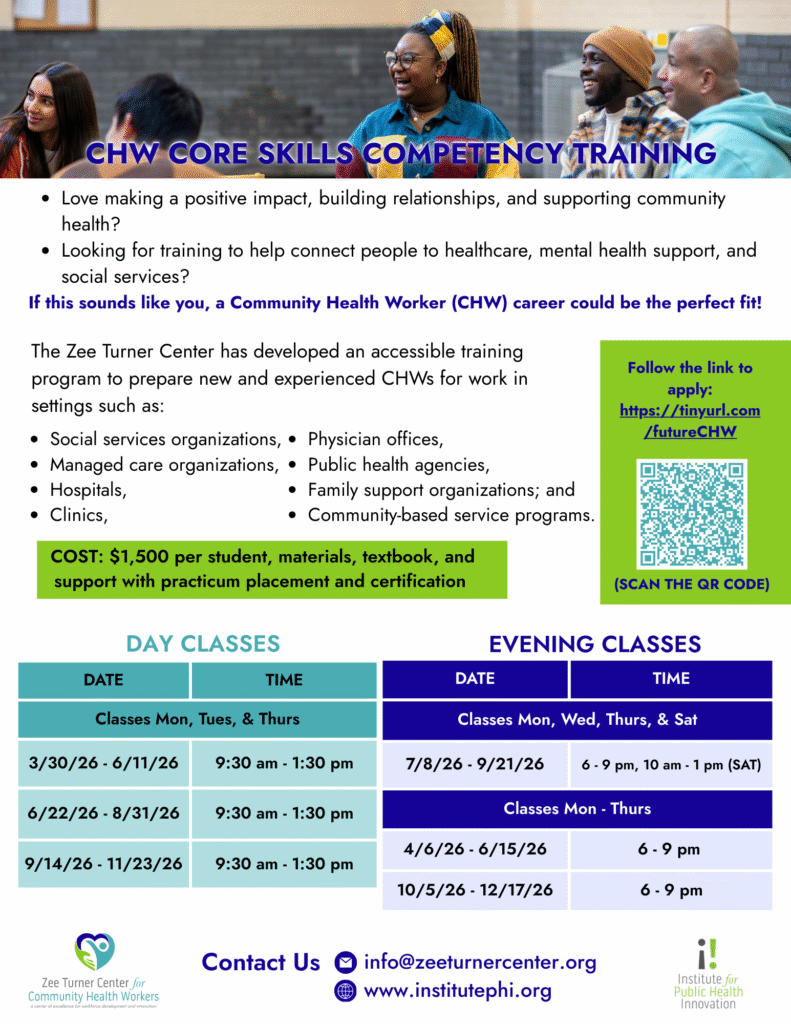
CHW Core Skills Competency Training

Unrecognizable man working by video call from a cafeteria

CHW Core Skills Competency Training

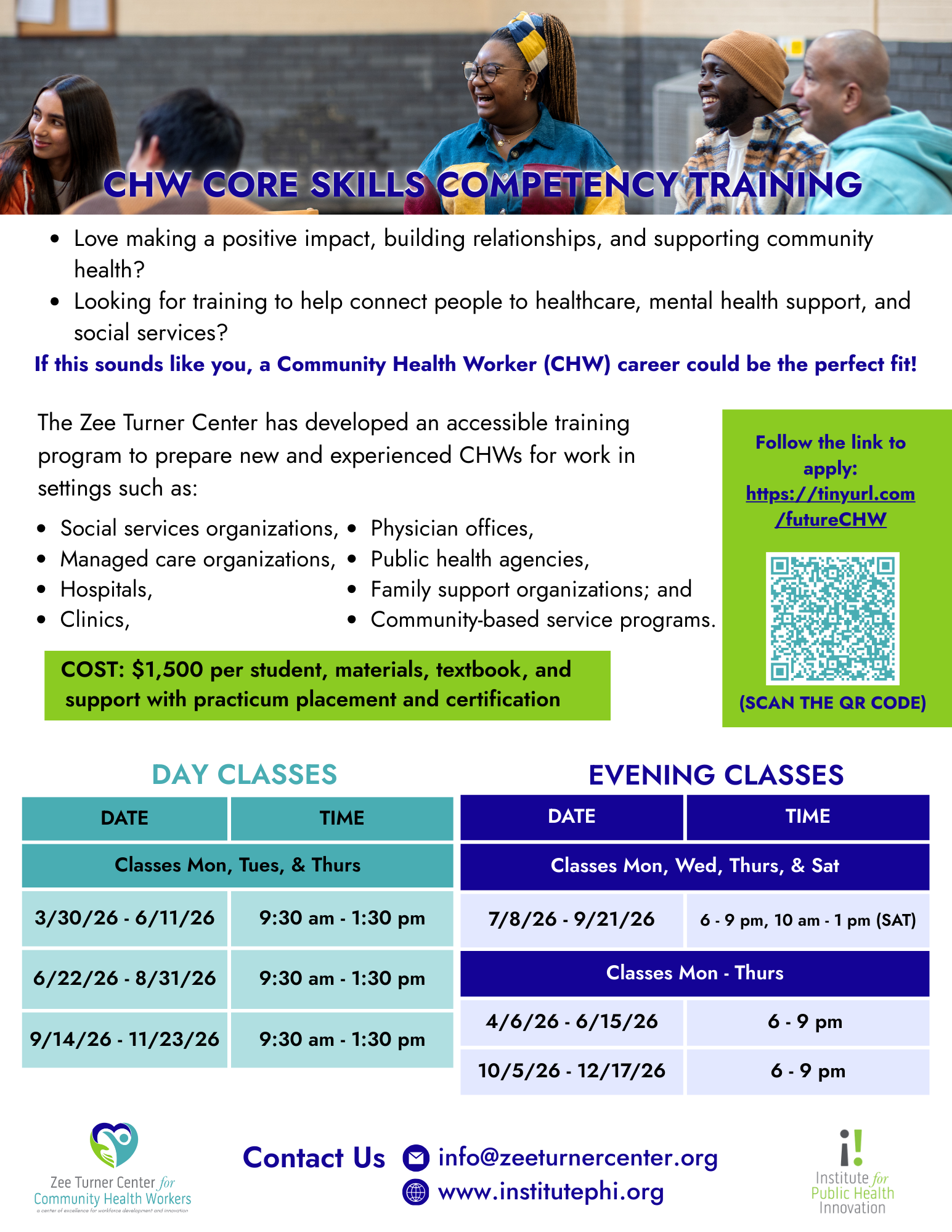
Nationally and regionally recognized, IPHI is the leading resource in CHW workforce development and the design, coordination, and evaluation of CHW initiatives. IPHI has trained over 1,500 CHWs, provided training and technical assistance to dozens of CHW employers and supervisors, developed and implemented over 15 CHW-based interventions, and directly employed close to 200 CHWs.

The Community Health Worker (CHW) Core Skills Competency Training is based on proven adult learning methods to effectively meet the diverse needs of learners. This flagship offering is a dynamic, hands-on program that minimizes traditional lecture-style (didactic) teaching. Instead, the training focuses on adult participatory methods, including team-building exercises, role-plays, Dyad (pair) work, and group interaction, as well as CHW-led “teach-backs” and presentations.

CHW Training Overview:

Format: Virtual, In-person, or Hybrid 

Length: 120 total 

  • 88 hours of instructional core competence training   
  • 32 hours of disease and special health topics 
  • A minimum of 40 hours of field practicum (shadowing experienced CHWs).
  • Access to continuing education (8 hrs./month) 

Availability/Schedule: 

  • Our CHW Core Skills Competency Training course lasts for 8-10 weeks.  
  • We offer day, evening, and some weekend schedules for your convenience 

Training Details

Pricing

Training Cost is $1,500*:  

  • Includes all classes, materials, CHW Foundation Textbooks, and help to find your practicum and certification support. Payment plans are available upon request.  
  • *Employers seeking training for more than five (5) CHWs, please contact the Training Manager for a group rate at [email protected]. 
  • Employers seeking customized training should contact the ZTC for a training quote. 

Audience (who should participate in our training)

This CHW training course is ideal for: 

  • Current CHWs or outreach workers, peer specialists, doulas, etc., needing core skills competency training 
  • Community members, peer mentors, or current employees driven to support health equity 
  • Individuals with lived experience and strong community connections, even if they have no previous clinical training  
  • Staff seeking eligibility for state-recognized CHW certification programs in the District of Columbia, Maryland, Virginia, or Michigan. No prior health care experience is necessary. We welcome those new to the field as well as staff seeking to formalize and expand their skill set.  

Training Prerequisites:

  • 18 years of age or older 
  • Has a high school diploma or GED (No specific work experience or degree is required. 
  • Must be a U.S. citizen or a foreign national with permanent resident status. 
  • Can commit to 112 hours of training over 10 weeks (including a 40-hour internship after the instructional training). 

Training Modules: Disease and Specialty Health Topics

  • Asthma 
  • Cancer 
  • Cardiovascular Disease 
  • Diabetes 
  • HIV and AIDS 
  • Intimate Partner Violence 
  • Mental Health and Wellness 
  • Oral Health 
  • Substance Use and Misuse 
  • Viral Respiratory Illness – Part 1 and Part 2 
  • Maternal Child Health  
  • Older Adult Health  
  • Medicaid 
  • Medicare 
  • Medical Terminology  
  • Medication Management  

Training Modules: Core Skills Competency Topics

  • Human Rights, Equity & Perspective Transformation 
  • Communication 
  • Public Health Knowledge 
  • Introduction to The CHW Role: CHW History, Roles, Skills, Tasks 
  • CHW Legal and Ethical Issues 
  • Data Collection and Medical Records 
  • Teaching and Capacity Building Skills & Clinical Practice 
  • Health Education and Prevention 
  • Outreach and Advocacy 
  • Resource Identification and Organization 

Learning Objectives:

  1. Define the scope of practice and understand and implement the roles, competencies, and responsibilities of a CHW 
  2. Acquire skills, tools, and methods for engaging the community and healthcare teams to minimize gaps in care 
  3. Incorporate nonjudgmental communication to support health equity 
  4. Incorporate concepts of ethics, professionalism, stress, and conflict management when working in a professional environment 
  5. Use competencies at the individual and group levels when conducting health outreach, community organizing, and advocacy efforts 
  6. Understand the commitment to social justice, cultural humility, and client and community-centered engagement 

Program benefits

  • Flexible: Choose morning or night classes. That way, you can still work or take care of your family. 
  • Approved: Matches state standards so you can get certified and work as a CHW Maryland, Virginia, and Michigan. 
  • Our trainers were CHWs themselves 
  • After completion, you can keep learning with workshops and events just for CHWs. 
  • We help you get ready for CHW jobs or help in your community 
  • After you finish, you’ll join a community of helpers making a difference every day. 

What You’ll Get:

  • Easy-to-follow lessons and friendly teachers who are real CHWs 
  • Digital CHW textbook “Foundations for CHWs,” workbook, and all study materials 
  • Practicum placement support. Help in being paired with a site for shadowing and on-the-job learning 
  • Lots of fun group activities and teamwork 
  • Access to 8+ hours/month continuing education and post-program support 
  • Certification support 

Other Ways We Can Help 

Not only do we train CHWs, but we also offer classes for supervisors and help organizations build their CHW programs. Additionally, we provide ongoing training for continuing education credits and help CHWs succeed at work. 

When Is the Next Training?  

Click here for the 2026 training schedule and flyer, or if you are an employer and would like to train your five (5) or more CHWs, please contact the Training Manager at [email protected] 

If you need assistance or have any questions, please email: [email protected]

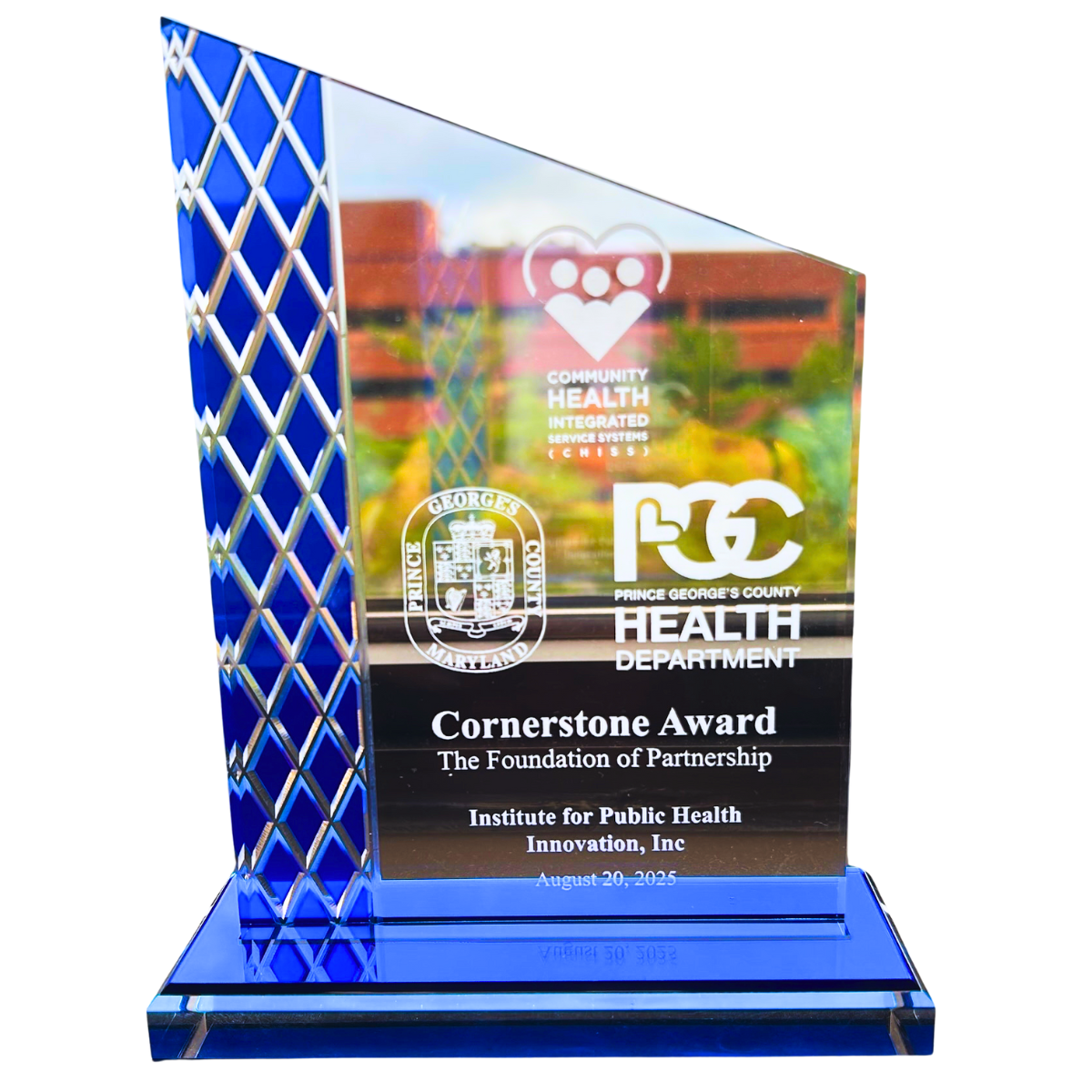
Foundation of Partnership Cornerstone Award

Foundation of Partnership Cornerstone Award

The Prince Georges County Health Department awarded IPHI the Cornerstone Award.

The Prince George’s County Health Department “Foundation of Partnership” awarded IPHI the Cornerstone Award. This recognition is for IPHI’s work on the Community Health Integrated Services System (CHISS). The team was recognized for its support and training of over 50 CHWs in Prince George’s County, MD.

For more information about the CHISS program and its impact, visit: www.institutephi.org/focus-areas/community-health-workers/chiss.

Communications and Branding

Elevate Your Mission Through Powerful Communication

At the Institute for Public Health Innovation (IPHI), we understand that clear, compelling communication and a strong brand are essential for any organization aiming to make a lasting impact. Leveraging almost two decades of award-winning experience in public health and non-profit communications, IPHI is now offering specialized strategic communications and branding services to help organizations amplify their mission, engage stakeholders, and achieve their goals.

Why Partner with IPHI?

Our expertise isn’t just theoretical; it’s built on a proven track record of tangible results and recognized leadership in the field.

  • Proven Impact: We have successfully transformed organizational brands, leading to significant increases in digital engagement. For example, we’ve driven a 375% increase in organic social media outreach and a 1054% increase in website traffic for our own initiatives.
  • Award-Winning Expertise: Our team includes accredited professionals recognized as “Top 40 Under 40” by PRWeek, honored for excellence in healthcare communications by PRNews, and Health Excellence Award for Strategy and Research by the Mid-Atlantic Society for Healthcare Strategy and Market Development (MASHSMD).
  • Deep Sector Knowledge: With lived experience and academic expertise in public health, non-profit, and government sectors, we bring a unique understanding of the challenges and opportunities specific to mission-driven organizations.

For more information, visit the Communications and Branding Case Study.

Our Services

We offer a comprehensive suite of services tailored to meet your organization’s unique communication and branding needs:

Brand Creation and Refresh

Was your brand launched 10+ years ago?

A brand refresh or rebrand should be considered every 7-10 years, or sooner if there are significant shifts in the business, target audience, or industry. Now might be a good time to evaluate if your brand still reflects who you are.

From developing core messaging to visual identity, we will help you build a distinctive and memorable brand that resonates with your audience.

Strategic Communications Planning

Are you looking to increase awareness, engagement, or response?

Let us help you create social media content strategies, optimize your online presence, and measure impact to maximize organic reach and engagement. We will develop a measurable communication plan that aligns with your organizational objectives and goals.

Communication Audit and Evaluation:

How many social media pages does your company have? Do you have a pulse on how many flyers, brochures, or URLs are directing to your site?

An effective communication audit goes beyond website hits and social media followers. Our award-winning team will evaluate your true communication footprint by evaluating your earned, owned, and shared outreach and provide data-driven recommendations.

Communications Training and Workshops

Don’t have time or budget for a two-day conference or to study for another accreditation? Are you looking for quick insight to enhance your communications team?

Empower your staff with the skills and tools for effective outreach with a communications workshop. Workshops can include media training, brand guidelines, and simple tools to evaluate and measure your organization’s footprint.

Our Approach

We believe in a collaborative, data-driven approach. We work closely with your team to understand your vision, assess your current ecosystem, and develop customized strategies that deliver measurable results. Our goal is to empower your organization to communicate with clarity, confidence, and impact.

Who Can Benefit?

Our services are ideal for:

  • Community-based organizations
  • Government agencies
  • Healthcare providers
  • Non-profit organizations
  • Public health departments
  • Any mission-driven entity seeking to enhance its communication effectiveness and brand presence.

Let’s Connect

Ready to elevate your organization’s voice and impact? Contact us to discuss your strategic communications and branding needs.

[email protected]

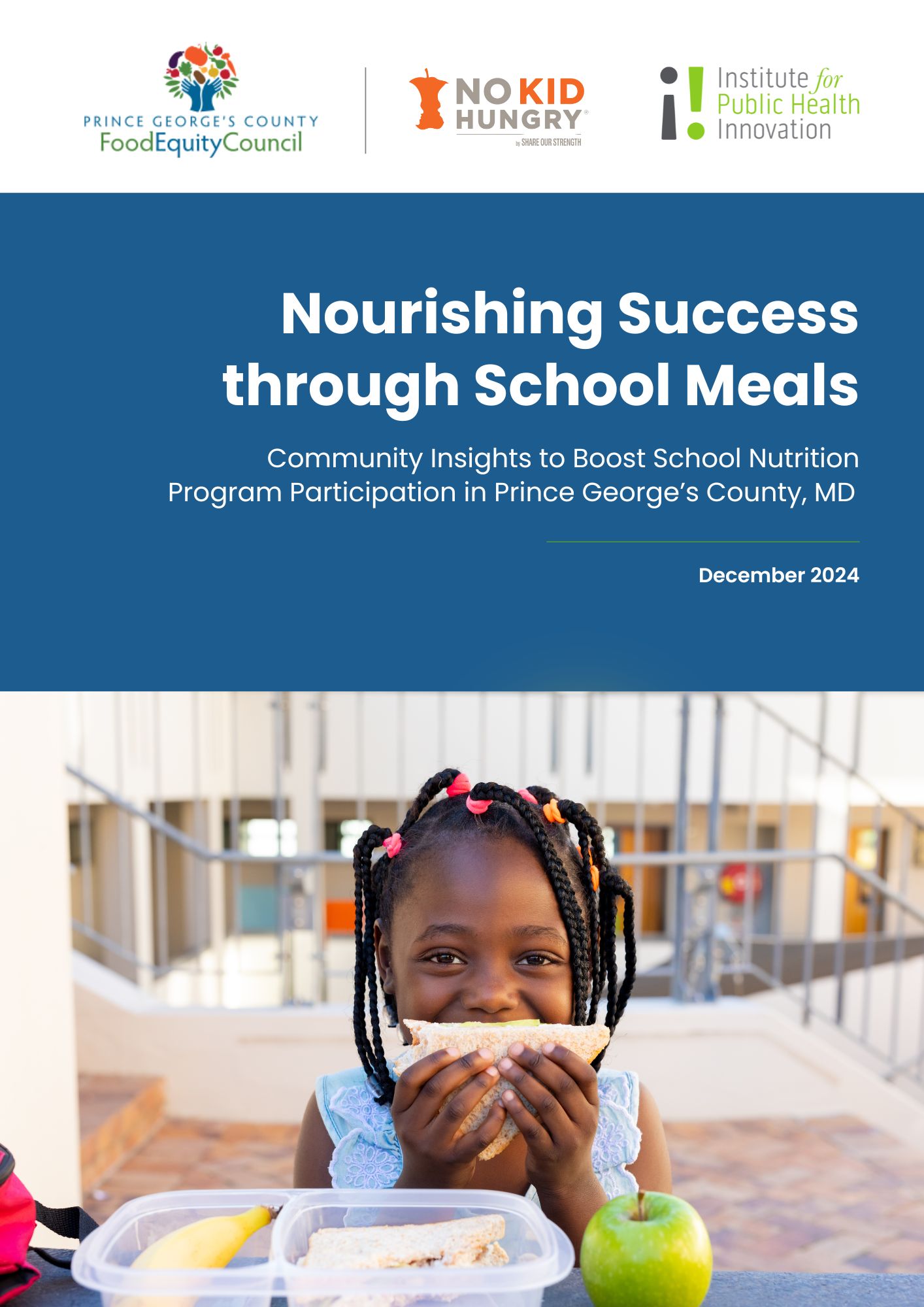
Nourishing Success through School Meals Report

Nourishing Success through School Meals Report

The Institute for Public Health Innovation (IPHI) and partners created this report to improve student health and academic outcomes by identifying and addressing barriers to school meal access in Prince George’s County, Maryland.

The Institute for Public Health Innovation (IPHI) and the Prince George’s County Food Equity Council (FEC) are currently engaging with students, parents, and school leadership to learn about the perceptions and barriers influencing participation in school nutrition. The team would like to partner with the Prince George’s County Public Schools (PGCPS) Food and Nutrition Services to develop and implement strategies to increase school meal participation across the county. The FEC will also leverage other key food and community health partners to expand and execute the identified strategies. The intended impact includes improvements to both student health and academic outcomes, promotion of school wellness, and environmental sustainability. This initiative is funded by Share Our Strength’s No Kid Hungry campaign.

To download the report, click: here

To view the executive summary of the report and recommendations, click: here


Health Equity Research Hub (University of Maryland School of Pharmacy)

Baltimore, Maryland, USA Skyline over the Inner Harbor at dusk.

Health Equity Research Hub (University of Maryland School of Pharmacy)

IPHI is proud to support the University of Maryland School of Pharmacy’s PATIENTS Program as it establishes a Health Equity Research Hub. With a $9.4 million grant from the National Institutes of Health (NIH) Common Fund, this hub is dedicated to advancing health equity through community-led research initiatives.

As a key partner, IPHI brings its expertise in community engagement and capacity building to this groundbreaking initiative aimed at addressing social determinants of health nationwide.

As part of the PATIENTS Program Health Equity Research Hubs, IPHI is co-leading the Research Capacity Building and Training Unit alongside University of Maryland, Baltimore (UMB) School of Pharmacy and other community experts. This unit focuses on empowering communities with the tools and training needed to lead impactful health equity research. By fostering collaboration between academic institutions and community organizations, this Hub will ensure that the voices of under-resourced populations are not only heard but are central to shaping research interventions that promote structural change.

Supporting Community-Led Interventions Nationwide

IPHI’s involvement in this initiative reflects our commitment to bridging the gap between public health innovation and community needs. By providing technical assistance, capacity-building resources, evidence-based training, and supporting the development of rigorous, community-led health equity interventions, we aim to help local leaders across the country drive meaningful improvements in health outcomes.

This Health Equity Research Hub is more than just a research initiative—it is a catalyst for transforming how health equity interventions are developed and implemented. Through collaboration with community partners and institutions like UMB, IPHI is helping create a future where all communities have the opportunity to achieve health equity. IPHI’s partnership with the PATIENTS Program at UMB exemplifies our longstanding mission to advance public health solutions that empower communities and address social determinants of health. Together, we are working to change the landscape of health equity research, ensuring that communities across the country lead the way in creating a healthier, more equitable future for all.

For more information, visit: https://news.pharmacy.umaryland.edu/patients-program-receives-9-4-million-grant-to-start-a-health-equity-research-hub-at-umb/

To learn more about the Health Equity Research Hubs, please contact the senior health program specialist at The PATIENTS Program, Tralisa Colby, MPH at [email protected].

Collaborative Neurologic Solutions

hands-hold-mri-scan-of-head-neck-and-brain-of-pat-2021-08-29-11-13-57-utc

Collaborative Neurologic Solutions

Collaborative Neurologic Solutions is a multi-state, community-led response to address the unmet needs of individuals and families impacted by neurologic health conditions.

IPHI collaborates with health and social care-related organizations to improve the quality of life for community members impacted by complex neurologic diseases. The team works to increase access to the resources needed to support community members’ quality of life.

The team works in the following key areas to achieve this vision:

  • Navigating health and social care systems
  • Community outreach and engagement
  • Professional education
  • Cross-sector collaborations

The team uses innovative, data-driven technology to map available resources for neurological disease communities. This technology reveals gaps in care, identifies organizations capable of implementing solutions, and showcases existing resources. The team gathers real experiences and opinions of people impacted by neurologic health conditions to prioritize and guide the work from design to evaluation.

This work creates equitable systems to maximize existing resources through awareness and directs resources to under-resourced communities and issues.

Scope of work: 

Collaborative Neurologic Solutions engages people living with neurological health conditions, care partners, and professionals in Maryland, North Carolina, Virginia, and West Virginia to deliver solutions addressing their most urgent needs. The team offers navigation tools, professional training and education, public awareness, and community engagement support.

Explore an example here:

To learn more about the Collaborative Neurologic Solutions project, please contact Senior Program Manager Lauren Ruiz at [email protected] or 202.987.2540.

Rural Multiple Sclerosis Solutions

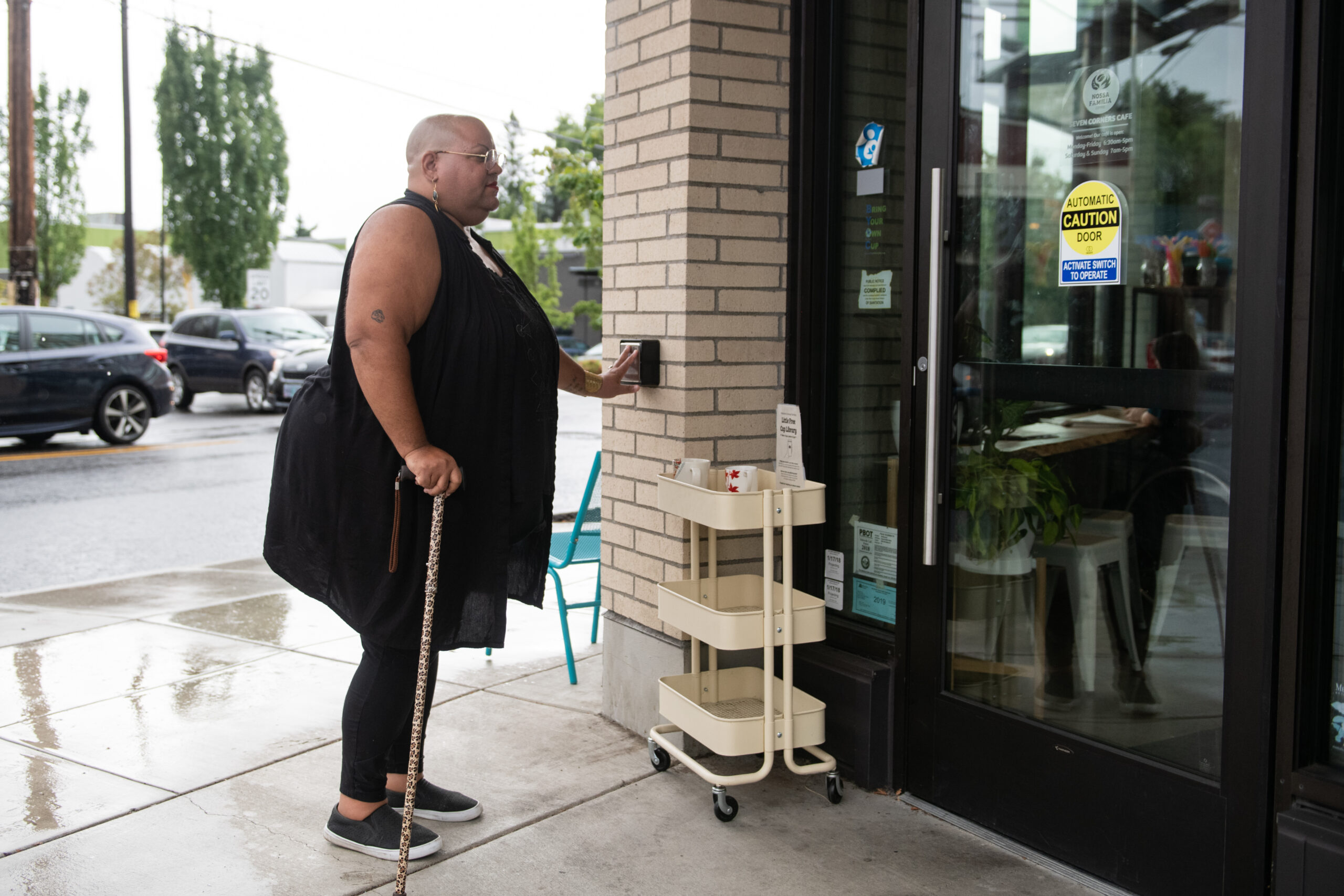
disabledandhere-043-1

Rural Multiple Sclerosis Solutions

Improving access to diagnostic and support resources for rural populations impacted by multiple sclerosis in Maryland, North Carolina, Virginia, and West Virginia.

In 2022, IPHI expanded its focus to include support for people living with multiple sclerosis (MS) and medical providers in rural areas. This 3-year project is funded by the Bristol Myers Squibb Foundation.

Through the project, IPHI and various community partners will:

  1. Create a tool to simplify navigation for people seeking MS resources.
  2. Provide education and training to service providers.
  3. Improve access, delivery, and use of MS care for people living with MS in rural areas.
  4. Increase public awareness about MS, including its risk factors, early signs and symptoms, and treatment options.

Many rural residents impacted by complex, chronic health conditions like MS often do not get the help or social services needed. Rural residents are burdened because services and resources do not exist in the area or are inaccessible due to barriers like transportation, cost, awareness, technology, mistrust, etc. As a result, people living in rural areas can go undiagnosed longer, face misdiagnoses, experience more treatment disruptions, and receive less support to address social determinants of health.

Scope of work:

The IPHI team is focusing on identifying and improving access in rural communities. Through the grant, non-specialty health providers will receive education and training on MS risk factors, early signs and symptoms, treatments, and resources. Rural residents will be engaged through convenings, focus groups, interviews, and community events to increase awareness of MS and connect affected residents to resources. Other activities include collaborating with mobile health units and similar community-based services to reach people where they are.

In partnership with VirginiaNavigator, IPHI will create a network map of health and social support resources in the project’s target area. The team will also establish Navigation Centers where community leaders will be trained on how to use the network map and provide navigation assistance. All activities will be informed by people living with MS, care partners, and community professionals.

The project will focus on these rural communities (collaborations and resources may be state-wide):

  • Maryland
    • Caroline County
    • Garrett County
  • Virginia
    • Brunswick County
    • Buckingham County
    • Charlotte County
    • Cumberland County
    • Danville
    • Henry County
    • Louisa County
    • Lunenburg County
    • Martinsville
    • Nottoway County
    • Orange County
    • Patrick County
    • Pittsylvania County
    • Prince Edward County
  • North Carolina
    • Caswell County
    • Duplin County
    • Greene County
    • Jones County
    • Lenoir County
    • Montgomery County
    • Surry County
    • Wilkes County
  • West Virginia
    • Fayette County
    • Marion County
    • McDowell County
    • Mercer County
    • Monroe County
    • Preston County
    • Raleigh County
    • Summers County
    • Wetzel County
    • Wyoming County

Upcoming Training:

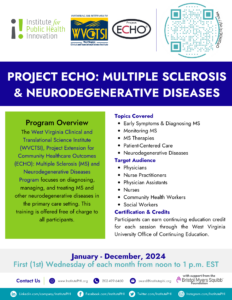
First (1st) Wednesday of each month from noon to 1 p.m. EST – Launching January 3, 2024

The West Virginia Clinical and Translational Science Institute (WVCTSI), Project Extension for Community Healthcare Outcomes (ECHO), and Multiple Sclerosis (MS) and Neurodegenerative Diseases Program focus on diagnosing, managing, and treating MS and other neurological diseases in the primary care setting. This training is offered free of charge to all participants. For more information, visit: here.

Topics Covered

  • Early Symptoms & Diagnosing MS
  • Monitoring MS
  • MS Therapies
  • Patient-Centered Care
  • Neurological Diseases

Resources:

Provide input to design an Extension for Community Healthcare Outcomes (ECHO) practice model, which aims to increase knowledge and confidence in treating patients with MS and neurodegenerative diseases.

Explore a prototype of the network map that identifies organizations located in or serving residents of Virginia living with Alzheimer’s and related dementias, ALS, Huntington’s disease (HD), MS, and Parkinson’s disease.

Learn more about issues affecting rural areas and how to identify counties for intervention.

Help recruit new collaborators by identifying key service providers and sharing these materials.

Understand the perspectives and priorities of people impacted by MS in rural areas by hearing key insights from a convening hosted in rural Virginia.

Acknowledgments:

Special thanks to our funders and partners:

  • Bristol Myers Squibb Foundation
  • Can Do MS
  • MS Alliance
  • VirginiaNavigator
  • West Virginia Clinical & Translational Science Institute

To learn more about Rural MS Solutions Project, please contact Senior Program Manager Lauren Ruiz at [email protected] or 202.987.2540.

Food Security Report

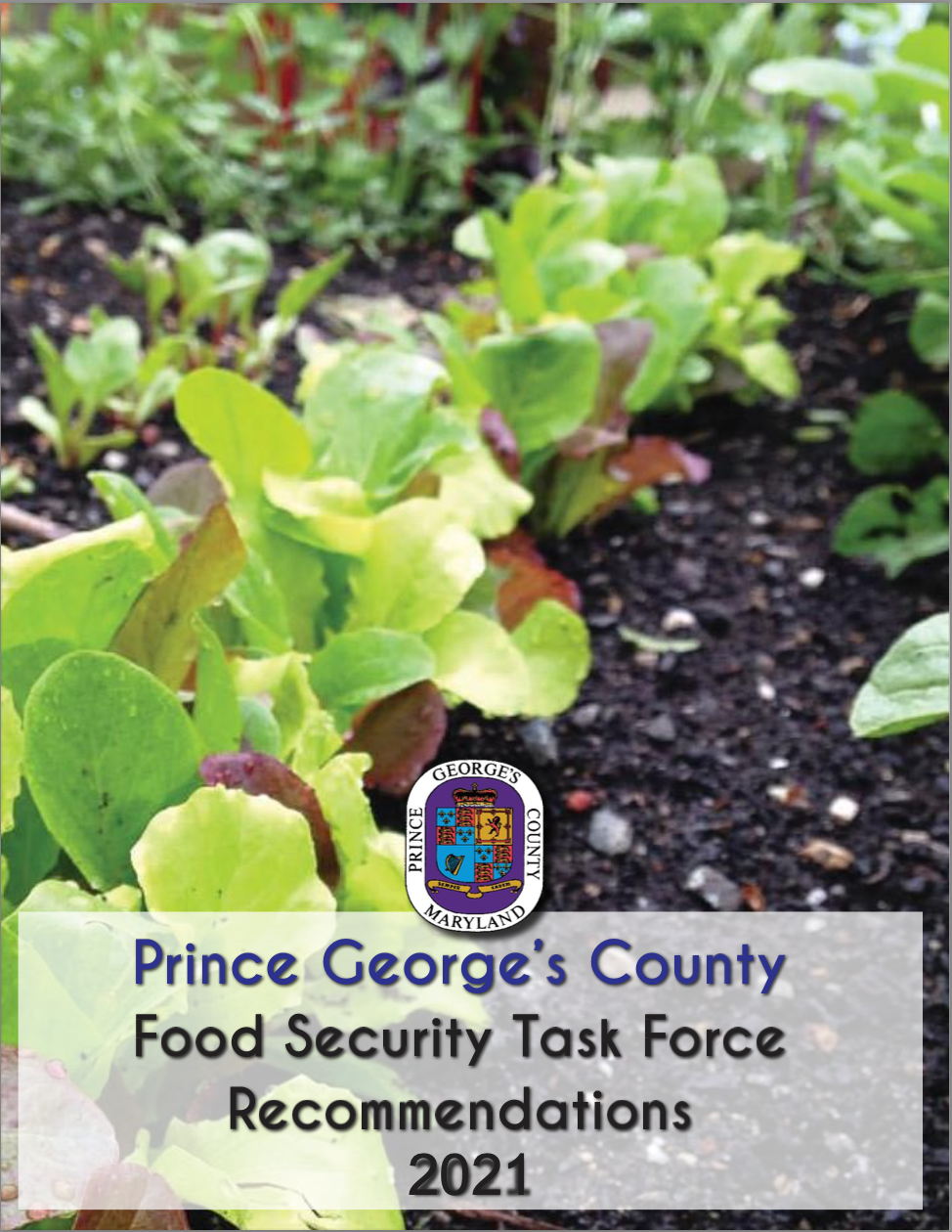
Title "Prince George's County Food Security Task Force Recommendations 2021" over a background image of crops growing from the ground.

Food Security Report

IPHI, Prince George’s County Food Security Task Force, and Prince George’s County Food Equity Council (FEC) completed a report to address the county’s food-security challenges exacerbated by the COVID-19 pandemic. The report recommends 11 solutions (four foundational and seven general strategies) for the Prince George’s County Council, Office of the County Executive, and County agencies to adopt.

To download the report, click: here.

To view the executive summary of the report and recommendations, click: here.


Foundational Recommendations

  1. Create and fund a Prince George’s County Food Security Office.
  2. Gather, analyze, and use data to inform and drive County agency food security decisions.
  3. Increase resident participation in federal nutrition assistance programs.
  4. Develop a master communication strategy for food security, resilience, and emergency preparedness.

Food Security Policies and Programs Recommendations

  1. Plan for future food security disruptions by developing an emergency food security plan that integrates food system experts into existing emergency management operations.
  2. Increase access to bulk food purchasing, infrastructure, and resources for food assistance providers.
  3. Co-locate food security and social safety net services to create closed-loop referral systems.
  4. Improve transportation options for residents to access healthy food retailers and providers.
  5. Leverage state and regional partners for cross-jurisdictional food systems planning, coordinated communication, and infrastructure development.
  6. Provide land access, infrastructure, and resources to help agriculture flourish.
  7. Continue to provide and expand market incentives to support healthy food retailers of multiple sizes in target communities.

Prince George’s Fresh

Supermarket employee helping a customer to choose

Prince George’s Fresh

Prince George’s Fresh is a pilot fruit and vegetable coupon benefit program designed to increase access to healthy food in Prince George’s County, Maryland.

Through a collaborative partnership between IPHI, Giant Food, Amerigroup, Anthem Foundation, and the Healthy Eating Active Living (HEAL) Workgroup of the Prince George’s Healthcare Action Coalition, Prince George’s Fresh will increase healthy food access for Prince George’s County residents. The program allows medical professionals at participating health clinics to recommend produce coupons and nutrition education to patients experiencing food insecurity. Prince George’s Fresh is an innovative opportunity to engage cross-sectoral partners in an evidence-based model to address County health disparities and food insecurity. For Prince George’s Fresh fact sheet, click: here.
In fall 2023, Prince George’s Fresh completed an evaluation report on “A Pilot of a Food as Medicine.” To view and download the report, click: here.
To learn more about Prince George’s Fresh, please contact [email protected].