Institute for Public Health Innovation (IPHI) Logo

Food Equity Council Leads COVID-19 Food Assistance Response in Prince George’s County, Maryland

Food Equity Council Leads COVID-19 Food Assistance Response in Prince George’s County, Maryland

Since the COVID-19 crisis began in March, the Prince George’s County Food Equity Council (FEC) has been one of the leading organizations for Prince George’s County’s COVID-19 food assistance response. Housed at IPHI, the FEC’s work has focused on coordinating the diverse partners and County agencies working to address the food assistance response and support residents. During the COVID-19 response, the FEC has increased the support and services it provides to vulnerable residents and communities.

During the month of April 2020, the FEC achieved the following:

  • Provided direct food donation coordination to partners resulting in over 10,000 prepared meals delivered to residents in need;
  • Conducted resident food navigation services including connecting residents to food assistance providers;
  • Created and launched the County’s only comprehensive online food assistance directory which has received over 13,000 hits since it launched a month ago;
  • Coordinated with 211 and the Health Department’s COVID-19 hotline to direct staff to relevant food resources;
  • Provided County Council members and the County’s Library System with resources to share with their clients and constituents;
  • Co-Hosted bi-weekly virtual convenings for over 70 food assistance providers, non-profit partners, and County agencies and leadership in partnership with the Department of Social Services.
  • Coordinated daily with the County Executive’s office, County agencies, regional food councils, and the philanthropic community to ensure we are taking advantage of resources available and implementing promising practices and that there is widespread awareness of the food access needs of residents;
  • Coordinated with food businesses such as regional food hubs, restaurants, farmers markets, and growers to connect them to market opportunities that address both their needs and the needs of food-insecure residents; and
  • Provided educational resources and advocacy support for food businesses, growers, farmers markets, and restaurants.

While ramping up efforts to address urgent direct food assistance needs to residents, the FEC remains dedicated to contributing to long-term solutions and building infrastructure to help prepare the County for a future food assistance crisis management.

For more information on the Prince George’s Food Equity Council and to find out how to provide support, contact Sydney Daigle, [email protected].
HEAL Grant Helps Increase Safe Space for Bicyclists in Frederick

HEAL Grant Helps Increase Safe Space for Bicyclists in Frederick

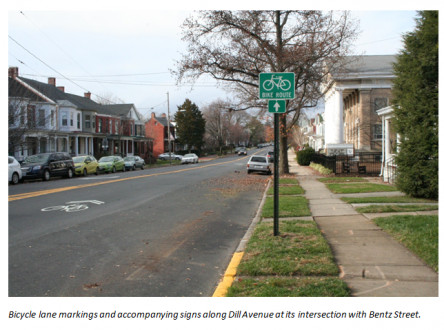
HEAL_Bike Lane Markings_Bentz Street

Through funding provided from IPHI’s Healthy Eating Active Living (HEAL) Cities & Towns Campaign, the City of Frederick, Maryland now has nearly six miles of bike lane striping and share use, or “sharrow,” markings, making it safe for residents to bicycle as a method of active transportation and as a commuting option.

The Institute for Public Health Innovation (IPHI), through its HEAL Campaign, offered $40,000 to local governments in Maryland and Virginia to implement policies that promote access to nutritious foods and physical activity through a competitive application process in the Spring of 2015. Over 25 communities applied for grants and kick-off awards ranging from $500 to $9,000. Ten local governments, including the City of Frederick, were awarded funds in August 2015 and have until February 2016 to complete the implementation process. For the purposes of this Small Grant Program, implementing a HEAL policy means to put it into effect. Often a lack of financial resources can be an obstacle for local governments to move from adopting a policy to policy implementation.

With its award, the City installed shared use bike striping and signs along Rosemont and Dill Avenues in October 2015. This corridor represents a critical connection between two existing shared bicycle lanes along Bentz Street and Fairview Avenue and passes by the local Hood College. In addition to city residents, students and faculty have benefitted from this project. A bi-annual bicycle and pedestrian data audit is scheduled for April 2016 to formally measure the expected increase in bicyclists using this corridor; a similar built environment improvement implemented in 2011 increased ridership by 40 bicyclists. Please stay tuned in the coming months for more success stories from HEAL Small Grant awardees across the region.

For more information on the HEAL Cities & Towns Campaign, visit the Campaign website at: healcitiesmidatlantic.org or contact Evelyn Kelly, Sr. Program Manager, [email protected].

Washington, DC Has Greatest Decrease in Premature Births Since 2010

County Health Rankings path to good health

The 2015 County Health Rankings reveal that Washington, D.C. has experienced the greatest decrease in premature births since the launch of the County Health Rankings in 2010

The  Robert  Wood  Johnson  Foundation  and  the  University  of  Wisconsin’s  Population  Health  Institute  have  released  the  sixth annual County Health  Rankings.  The County  Health  Rankings show  us  where  we  live  matters  to  our  health and  provide  counties  with  an  annual  check­‐up  of  their  health. The  Rankings  provide  local-­level  data that  allows  each  state  to  see  how  people  from  one  county  to  another compare on  a  range  of  factors  that  determine  health— unemployment,  education,  community  safety,  diet  and  exercise,  and  other  areas to ensure  that  every  community  is  a  healthy  place  to  live,  learn,  work, and  play.  Learn more  at www.countyhealthrankings.org

The Institute for Public Health Innovation serves as the state-team lead for the District of Columbia for the annual County Health Rankings release. Although Washington, D.C. is not usually compared to other counties due to its unique jurisdictional status, this year’s Rankings reveal that Washington, D.C. has had the greatest decrease in premature births since the initial County Health Rankings release six years ago.

The Rankings also revealed the following national trends:

  • Premature death rates are dropping, with 60 percent of the nation’s counties seeing declines. But for many counties these rates are not improving – 40 percent of counties are not making progress in reducing premature death.
  • One out of four children in the U.S. lives in poverty. Child poverty rates are more than twice as high in the unhealthiest counties in each state than in the healthiest counties.
  • Violent crime rates are highest in the South. Violent crime rates, which affect health, well-being, and stress levels, are highest in the Southwest, Southeast, and Mississippi Delta Regions.
  • Having a job influences health. Unemployment rates are 1.5 times higher in the least healthy counties in each state as they are in the healthiest counties. During the recession, counties in the West, Southeast, and rust belt region of the U.S. were hit hardest by growing unemployment. Many, but not at all, of these counties have seen their unemployment rates drop since the recession ended in 2010.

Stay tuned for an upcoming event hosted by the Institute for Public Health Innovation and Washington Parks & People in early May 2015 to explore how a variety of factors influence opportunities for health in Washington, D.C.

IPHI’s HEAL Cities & Towns Campaign in the News

IPHI’s HEAL Cities & Towns Campaign gained local press this week in response to two municipalities joining the Campaign:

  • Leesburg Today covered the Town of Leesburg’s adoption of a HEAL Resolution, which includes policy strategies aimed at improving workplace wellness, future land use and transportation planning, and increasing nutritious foods served at Town-buildings and events.
  • The Prince George’s County Gazette covered the City of College Park’s adoption of a HEAL Resolution, which sets policy goals for the City that include the adoption of a Complete Streets policy, creating a workplace wellness committee for the municipal workplace, supporting community gardens, and encouraging acceptance of SNAP/EBT benefits at farmers markets.
College Park Mayor and Council receive plaque for joining Inaugural Class of HEAL Cities & Towns in Maryland. (May 10, 2014)
At the Maryland Municipal League Annual Convention, the Mayor and Council of College Park received a plaque recognizing them as a member of the Inaugural Class of HEAL Cities & Towns in Maryland. The plaque was presented by the Institute for Public Health Innovation. ( May 10, 2014 – Ocean City, MD)


Prince George’s County Food Equity Council Hosts an Open Showing of the Webinar Community Food Councils: Challenges and Opportunities

Colmar Manor, Maryland (April 17, 2014) — In an effort to raise awareness of the importance of local food policy councils and provide an opportunity for members and area councils to learn and share best practices, the Prince George’s County Food Equity Council will host a free public showing of the webinar “Community Food Councils: Challenge and Opportunities.”  The webinar is co-hosted by the Center for Enviornmental Farming Systems and the University of North Carolina’s (UNC) School of Government.

WHAT: Webinar Showing – Community Food Councils: Challenges and Opportunities
WHEN: Thursday, April 17th, 2014, 12:30-2:00 pm EDT
WHERE: Colmar Manor Town Hall, 3701 Lawrence St, Colmar Manor, MD 20722
The Prince George’s County Food Equity Council is a local food policy council whose mission is to significantly improve public health, food security, and community well-being of all who live, work, study, worship and play in Prince George’s County, Maryland.  The Food Equity Council is one of a growing number of local food policy councils that work collaboratively to identify and propose innovative solutions that advance local food systems in order to spur economic development, improve public health, and ensure environmental sustainability.According to the UNC School of Government, “Community and regional food councils…are emerging as important mechanisms to stimulate the kind of dialogue and concerted action necessary to improve local food systems. These councils are rapidly emerging across the country.”Food Equity Council Coordinator, Sydney Daigle, “Thank(s) UNC’s School of Government for generously awarding the Food Equity Council with a scholarship to host a free public showing of the webinar.  Prince George’s County’s rates of obesity and overweight are the highest in Maryland and food swamps densely populate the inner beltway.  The Food Equity Council plans to use the promising practices shared by experts and participants to enhance the strategies we use to tackle these issues.”The Prince George’s County Food Equity Council is incubated within the Institute for Public Health Innovation and funded by a CDC Community Transformation Grant.  For more information about the Food Equity Council and its three workgroups, Healthy Eating and Nutrition Education, Healthy Food Retail, and Local Food Production, email [email protected].

# # #

Prince George’s County Food Equity Council Can Hear the Maryland Crunch!

Suitland, Maryland (March 25, 2014) — In an effort to raise awareness of how school breakfast can alleviate childhood hunger, the Prince George’s County Food Equity Council has partnered with Maryland Hunger Solutions to participate in a Hear the Maryland Crunch! event at Suitland Elementary School. Hear the Maryland Crunch! is a fun and educational event that includes a state-wide, synchronized bite into an apple. Schools and other partners across the state are participating in this event to spread the word that every child in Maryland should have access to a healthy breakfast.

Food Equity Council members will “crunch” with students at Suitland Elementary School to highlight the school’s successful Maryland Meals for Achievement program, a universal school breakfast program. Suitland Elementary Principal Pamela Preston shares, “Breakfast in the classroom has gone well for us. Teachers and students are receptive. I am pleased because it offers students in need another opportunity to be fed without embarrassment.”

The Prince George’s County Food Equity Council is local food policy council whose mission is to significantly improve public health, food security, and community well-being of all who live, work, study, worship and play in the County. The Council recognizes that nearly 13% of all Maryland households struggle with hunger, and lack access to adequate food to help them live an active and healthy life, according to the U.S. Department of Agriculture. Increasing participation in School Breakfast – which reaches 56.5 of low-income students in Maryland for every 100 students that receive school lunch – would help end childhood hunger, as well as boost learning and test scores, improve attendance and student behavior, and improve overall student health.

“School breakfast is a win-win-win for schools, families, and kids. Children who start the day with a healthy meal have improved academic, behavioral, and health outcomes and eating school breakfast helps families stretch tight food budgets and schedules,” says Sydney Daigle, Prince George’s County Food Equity Council Coordinator.

Food Equity Council members will “crunch” at 7:50 am at Suitland Elementary School, 4650 Homer Avenue, Suitland, MD 20746. The Prince George’s County Food Equity Council is incubated within the Institute for Public Health Innovation and funded by a CDC Community Transformation Grant. For more information about the Food Equity Council and its three workgroups, Anti-Hunger and Obesity Prevention, Healthy Food Retail, and Local Food Production, email [email protected]. For more information about Hear the Maryland Crunch! contact Michael J. Wilson, Director of Maryland Hunger Solutions at 410.528.0021, x27 or [email protected].

# # #

The Prince George’s County Food Equity Council Hosts a TEDxManhattan Viewing Party

Upper Marlboro, Maryland (March 1, 2014) — In an effort to raise awareness and promote innovation in the County’s food system, the Prince George’s County Food Equity Council and Prince George’s Community College are partnering to host a TEDxManhattan “Changing the Way We Eat” Viewing Party.  TEDxManhattan is a one-day conference in New York City featuring a dynamic and diverse group of speakers addressing issues in the sustainable food and farming movement.  The viewing party will show all three sessions of “Changing the Way We Eat” including a performance and talk by Parkdale High English teacher and poet, Clint Smith.  Local events will include a youth panel featuring students involved in food systems projects at Parkdale and Fairmont Heights High Schools and a free lunch catered by Chipotle.

“We’re excited to share the inspiring sustainable food systems work being done across the country, and starting a dialogue about how residents can become involved in changing the way Prince George’s County eats,” says Sydney Daigle, event organizer and Prince George’s County Food Equity Council Coordinator.

The event is co-hosted by the Prince George’s County Food Equity Council, a local food policy council funded by a CDC Community Transformation Grant and incubated within the Institute for Public Health Innovation.  The Food Equity Council’s mission is to significantly improve public health, food security, and community well-being of all who live, work, study, worship and play in the County.  The Council will develop and support policies, approaches, procedures, practices and initiatives to create systemic change to the local food system, ensuring health equity and food access especially among communities that have been negatively impacted by the current food system.

The TEDxManhattan Viewing Party will be hosted at the Prince George’s Community College Westphalia Campus located at 9109 Westphalia Rd, Upper Marlboro, MD 20774.  Tickets are limited and those interested in attending should RSVP to www.pgc-tedxmanhattan.eventbrite.com by 11:30 pm on February 28th.  Chipotle will cater a free lunch with vegetarian and vegan options available.  For more information about the Food Equity Council and its three workgroups, Anti-Hunger and Obesity Prevention, Healthy Food Retail, and Local Food Production, email[email protected].

Institute for Public Health Innovation, Department of Parks and Recreation, and the Transforming Neighborhoods Initiative Pilot Community Discussions on Active Transportation to Recreational Opportunities

Washington, DC (January 27, 2014) – The Institute for Public Health Innovation (IPHI) is pleased to announce Community Connectivity Forums for residents of Bladensburg, Langley Park, and Suitland to discuss improving access to recreational opportunities for children and families. These are being held in collaboration with the Maryland National Capitol Parks and Planning Commission Department of Parks and Recreation and the Prince George’s County Transforming Neighborhoods Initiative with support from technical experts Wildflower Consulting and GP Red.  This collaboration aims to create safe access to recreational opportunities, concentrating on a ½-1½ mile radius around targeted community centers so that children, youth, and families can confidently walk or bicycle to these locations. This project is based on the Safe Routes to Play concept, which is a child-centered planning process which helps communities assess connectivity between neighborhoods and parks, playgrounds, trails, and natural areas for children and families, focusing on methods of active transportation, such as walking or biking.

Each forum will provide community residents the opportunity to discuss any obstacles they face in walking or biking in their neighborhood. Additionally, participating youth will present their findings from PhotoVoice, a photo-documentation process, and UMAP, a mapping process, to demonstrate the barriers they face. Forums will be held in both English and Spanish, and childcare and refreshments will be provided.

One forum will be held in each community:

Suitland – Tuesday, January 28, 6:30-8:30PM, Suitland Community Center, 5600 Regency Lane

Bladensburg – Wednesday, January 29, 6:30-8:30PM, Bladensburg Community Center, 4500 57th Avenue

Langley Park – Thursday, January 30, 6:30-8:30PM, Langley Park Community Center, 1500 Merrimac Drive

Results from these forums will be incorporated into a Blueprint addressing access to recreational opportunities and pedestrian health and safety. This blueprint will include findings from the three communities and an action plan for each, providing solutions to access issues surrounding recreational opportunities.

Funded by IPHI through a Community Transformation Grant (CTG) from the Centers for Disease Control and Prevention, these community forums are one element of a larger program that endeavors to improve health and quality of life for communities Prince George’s County. In addition to improving safety and increasing access to recreational opportunities, IPHI also funds strategies that increase access to and affordability of healthy foods for low-income families and improve delivery of clinical preventive services through the use of community health workers.

To become involved with Safe Access to Recreational Opportunities, please contact Catherine Diamante at [email protected].