
Institute for Public Health Innovation (IPHI) Logo

The Food Equity Council’s COVID-19 Food Assistance Response in Prince George’s County, Maryland: A One-Year Update 

Release Date: April 01, 2021

The Food Equity Council’s COVID-19 Food Assistance Response in Prince George’s County, Maryland: A One-Year Update

It’s been one year since Prince George’s County saw its first COVID-19 case. Since then, over 79,000 Prince Georgian’s have been infected and over 1,300 have died.

As we mark this somber occasion, the Prince George’s County Food Equity Council (FEC) is looking back on both the health and economic hardship that impacted the county as well as new opportunities that surfaced as members of the FEC stepped up to lead the county’s COVID-19 food security response.

This past year, the FEC saw existing social, health, and economic inequities unearthed and underscored. Prince George’s County, a majority Black county, experienced the highest death rates in Maryland from complications related to COVID-19. Food insecurity, particularly among vulnerable populations, skyrocketed by 20 percent leaving over 150,000 residents food insecure. Unemployment rose as businesses shuttered and families struggled to keep food on the table as school meal services stalled. These disruptions were a shock to our county’s systems, and agencies were unprepared for the social service demands our county residents required.

Seeing this need, last March, the FEC pivoted our work to coordinate the diverse partners and agencies working to address emergency food assistance relief and response. Over the past year, the FEC has:

  • Created and launched the county’s only comprehensive online food assistance directory in English and Spanish, which has received over 120,000 hits since it launched a year ago;
  • Provided resident food navigation services including connecting residents to food assistance providers and 211 staff;
  • Launched the county’s first food recovery platform to reduce food waste and increase food donations to food assistance providers and pantries;
  • Secured funding to purchase three refrigerated trailers to increase cold storage capacity for food assistance providers throughout the county;
  • Co-Hosted 20 virtual convenings for over 70 food assistance providers, non-profit partners, and County agencies and leadership in partnership with the Department of Social Services;
  • Coordinated with our County Executive’s office, county agencies, regional food councils, and the philanthropic community to ensure we are taking advantage of resources available and implementing promising practices and that there is widespread awareness of the food access needs of residents;
  • Provided direct food donation coordination to partners resulting in over 10,000 daily prepared meals delivered to residents in need at the peak of the pandemic;
  • Provided County Council members and the County’s Library System with resources to share with their clients and constituents;
  • Coordinated with food businesses such as regional food hubs, restaurants, farmers markets, and growers to connect them to market opportunities that address both their needs and the needs of food-insecure residents; and
  • Provided educational resources and advocacy support for food businesses, growers, farmers markets, and restaurants.

As vaccines become more widely available and infection rates slow, there is much cause for celebration. However, at the same time, we know that the food insecurity crisis is far from over. Over the course of the next year, the FEC remains committed to continuing our work to address the food assistance response and support residents and families in need through coordinated resources and information sharing. In addition, the FEC is actively working with the County’s Food Security Task Force to develop recommendations to increase food security and build a more resilient and crisis-ready food system. 

We extend our gratitude to the many partners that have and continue to support our work. As a volunteer-based council incubated within the Institute for Public Health Innovation, a 501(c)(3) charitable organization, the FEC depends on the generous support of community members and organizations. If you are able to support us with a contribution of any size, please donate here

For more information on the Prince George’s Food Equity Council and to find out how to provide support, contact Sydney Daigle, [email protected].
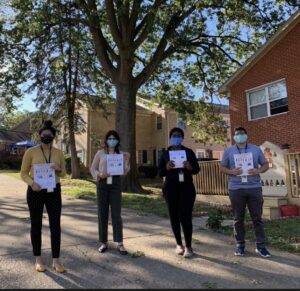
IPHI’s Equity-Centered Training Program for Pandemic Emergency Responders

For the March 2021 issue of its publication Elevate, the National Network of Public Health Institutes (NNPHI) spoke with IPHI’s Dr. Carolyn Padovano and Christine Stewart to discuss IPHI’s health equity-centered training program for contact tracers and other COVID-19 emergency responders.

IPHI developed the training specifically its public/private partnership with Fairfax County Health Department in Virginia. To access this issue, click: HERE.

The Prince George’s County Food Equity Council Launches New Food Recovery Platform to Fight Hunger and Reduce Food Waste

FOR IMMEDIATE RELEASE– January 25, 2021

Media Contacts:
Julia Groenfeldt, [email protected]

The Prince George’s County Food Equity Council Launches New Food Recovery Platform to Fight Hunger and Reduce Food Waste

PRINCE GEORGE’S COUNTY, MD — The Prince George’s Food Equity Council (FEC), an initiative of the Institute for Public Health Innovation (IPHI) has joined the Food Rescue US network to launch the Food Rescue US platform in Prince George’s County. The county’s food recovery efforts will be coordinated by FEC staff and funding from the Greater Washington Community Foundation and Philip L. Graham Fund. 

Food Rescue US, a national nonprofit organization, is a leader in food rescue operations. Since 2011, Food Rescue US has helped launch food recovery communities in 39 locations across the country, providing more than 56 million meals and keeping over 75 million pounds of food out of landfills. Through the use of its proprietary software, Food Rescue US provides the platform for volunteer food rescuers to directly transfer excess food from businesses to local social service agencies that feed the food insecure. Using the technology platform, the FEC will help coordinate food rescue donors, volunteer rescuers, and food assistance service providers to support hunger relief efforts and reduce food waste in Prince George’s County.  

“We’re excited to expand our reach into Prince George’s County and work with the Food Equity Council,” said Carol Shattuck, CEO, Food Rescue US. “Working directly with community organizations doing critical work for their residents, Food Rescue US is able to provide our innovative technology and institutional knowledge to empower their food recovery work.” 

Since 2013, the FEC has collaborated with residents, local businesses, organizations, and county government to create systemic change to the local food system, promote health, economic opportunity, food security, and well-being in Prince George’s County. This past year, the FEC’s work has taken on a new urgency as the COVID-19 pandemic caused skyrocketing rates of food insecurity and high demand for food among food assistance providers and social service organizations. According to the Capital Area Food Bank, over 104,760 county residents were food insecure in 2020, the highest in the Metro DC Region. By developing a robust food waste and recovery network, IPHI, FEC, and Food Rescue US hope to create a more resilient, sustainable, and equitable food system that can support the growing number of food-insecure residents. 

“Through the use of Food Rescue US platform we are able to create infrastructure changes to ensure that we don’t miss opportunities to connect food donors and services providers,” said Evelyn Kelly, Program Director at IPHI. “We will not only help families in need but also reduce our environmental footprint and food waste in our landfills.” 

Over the next few months, FEC staff will conduct outreach among businesses, organizations, volunteers, and providers to expand the Food Rescue US network in the county and bring partners onto the platform. The easy to use platform is free and available for desktop use. Food donors are invited to sign up to provide available food. Residents interested in volunteering can sign up to pick up and deliver food. Food providers can sign up to receive food to support food assistance and donation efforts. Everything is coordinated directly via the platform, and FEC staff are available to provide additional support and assistance to coordinate donations and delivery throughout Prince George’s County. 

About the Prince George’s County Food Equity Council: 

The Prince George’s County Food Equity Council (FEC) is a local food policy council that works to help residents grow, sell, and choose healthy foods. Since 2013, FEC has been a voice for county residents at the policymaking table. The FEC focuses on systematic and sustainable changes to promote health, economic opportunity, food security, and well-being in Prince George’s by advocating for policy that creates a more equitable local food system. The FEC is housed within the Institute for Public Health Innovation. For more information on FEC, visit www.pgcfec.org and follow FEC on social media @pgcfec. 

About the Institute for Public Health Innovation:

IPHI develops multi-sector partnerships and innovative solutions to improve the public’s health and well-being across Maryland, Virginia, and the District of Columbia.  Our work strengthens health systems and policy, enhances conditions that promote health, and builds community capacity to ensure equitable health opportunities for all.  IPHI is one of over 40 public health institutes across the country and a member of the National Network of Public Health Institutes.  For more information on IPHI, see www.institutephi.org, and follow IPHI on Facebook and Twitter @InstitutePHI.

###