Institute for Public Health Innovation (IPHI) Logo

Zee Turner Center

Zee Turner Center for CHWs

Zee Turner Center for Community Health Workers

The Zhilphia “Zee” Turner Center for Community Health Workers (Zee Turner Center), formerly known as the Center for Community Health Workforce (CCHW), is a regional center for excellence that advances Community Health Worker (CHW) workforce development and innovation.

The CCHW was launched in 2013 to grow opportunities for peer-based workforce strategies. Specifically, the center was created to develop and support the community-based health workforce and CHWs.

The Zee Turner Center priorities:

  • Develop CHW regional standards and scopes of practice
  • Enhance teaching program for CHW training and continuing education
  • Support CHW network development across the District of Columbia, Maryland, Virginia, and beyond
  • Consult and provide technical assistance to organizations requesting help in planning, operating, and evaluating CHW programs
  • Support the effective integration of CHWs into clinical and community-based teams and design policies and programs that facilitate CHW retention
  • Research and find innovative CHW models
  • Serve as a clearinghouse for regional, national, and international CHW best practices

Who was Zee Turner?  

The Zee Turner Center was named in memory of CHW Zhilphia “Zee” Turner. Zee Turner was an IPHI employee who dedicated 15 years of her life to serving the Washington, DC, area. As someone who lived with a chronic health condition for 24 years and overcame adversity, Zee used her experience to help communities with substance use addiction and HIV/AIDS.

“When I get notice that people are out of care, I call them. If I get no answer, I send them a letter – or I go knock on their doors. I try to fix some of the barriers that led them out of care and I work with their case workers to get them back to taking their medicines.” 

– Zee Turner in the Washington Informer

Zee was an educator, mentor, and advocate through IPHI’s Positive Pathways initiative. Her unwavering dedication and genuine care for those around her made her a beloved figure in the community. At the 2014 Unity National CHW Conference, Zee was awarded the posthumous Esther M. Holderby CHW Special Recognition Award.

IPHI proudly honors her CHW legacy by naming this regional center for excellence after her. To learn more about her legacy and life, visit:

To learn more about the Zee Turner Center, please contact [email protected] or visit  Zeeturnercenter.org to stay updated with CHW opportunities.
Cold Storage Infrastructure Improvement

DSC_0409

Cold Storage Infrastructure Improvement

IPHI’s initiative, Prince George’s County (PGC) Food Equity Council (FEC), is working with stakeholders in PGC to improve cold storage infrastructure for food assistance organizations and food pantries.


Food security skyrocketed throughout the pandemic, with 48% of PGC residents experiencing food insecurity in 2021. Even though food pantries are dedicated to meeting the growing demand, infrastructure challenges remain a barrier to expanding their services. When food assistance providers don’t have the proper infrastructure to store food, they’re forced to either turn down or distribute less healthy perishable food donations like produce, meat, and dairy.

The FEC is working to address this barrier by increasing cold storage infrastructure availability in PGC, with funding support from Washington Gas. 

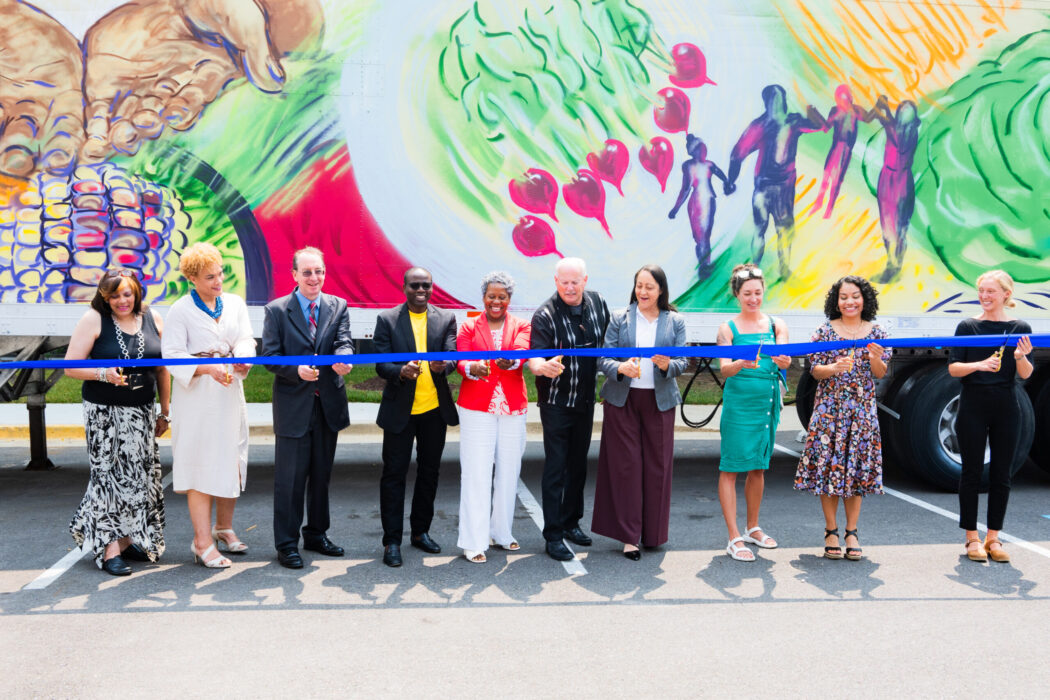
In 2021, the FEC helped three non-profit food assistance organizations buy, upgrade, and design a wrap for refrigerated trailers. The trailers allowed food assistance providers and pantries to distribute more fresh food to residents in need. Each trailer is shared by a network of partner organizations located in Brandywine, Landover, and Landham in PGC. Collectively, partners are storing and distributing 32,100 pounds of food each week using the cold storage trailers.

In 2023, the FEC and Washington Gas continue to work together, purchasing and upgrading two 48foot cold trailers at Kingdom Global and Tabernacle Church. To learn more about these two recent developments, visit: HERE

To learn more about the Food Equity Council, please visit: www.pgcfec.org.

Mid-Atlantic Regional Public Health Training Center

Two women in face masks talking at a table.

Mid-Atlantic Regional Public Health Training Center

IPHI is a proud training provider for the Mid-Atlantic Regional Public Health Training Center (MAR-PHTC).


MAR-PHTC is part of a national network of 10 public health training centers funded by the Federal Health Resources and Services Administration to improve the nation’s public health system by strengthening the technical, scientific, managerial, and leadership competence of the current and future public health workforce. MAR-PHTC serves the District of Columbia, Maryland, Virginia, West Virginia, Delaware, and Pennsylvania and is based at the University of Pittsburgh School of Public Health.

In addition to the partnership with MAR-PHTC, IPHI has worked with public health departments. We support the Blue Ridge Health District in Virginia as they adapt its internal policies and practices to become an anti-racist organization committed to promoting health equity. Our capacity-building work includes in-depth workshops on strategies and best practices for organizational leadership and equity committees to lead transformational change for equity. We have also guided key administrative issues such as workforce diversity, community engagement, customer service, communications, evaluation, and accountability.

Previous work with health departments includes training and technical assistance with the Richmond City Health District, Peninsula Health District, and Norfolk City Department of Health. We assisted the local health department to develop an Equity and Health in All Policies (EHiAP) approach to local governmental decision-making. We provided training on EHiAP and best practices across the country, strategic support in engaging elected officials and other governmental leaders, and policy expertise in developing and passing local legislation to support using an EHiAP framework.

Our educational and training opportunities include classroom-based instruction, workshops, and online professional development events, as well as tailored technical assistance on the following topics:

  • Public Health
  • Health Equity
  • Equity and Health in All Policies
  • Social Determinants of Health
  • Community Health Worker Development
  • Leadership and Management
  • Racism as a Public Health Crisis
  • Cultural Humility
  • Implicit Bias in Public Health and Healthcare
  • Community Engagement
  • Conducting Equity Impact Reviews of Policies, Programs, and Services
  • Communicating Equity to Decision-Makers

To learn more about IPHI public health workforce trainings, please contact us at [email protected].

Community Health Worker Academy

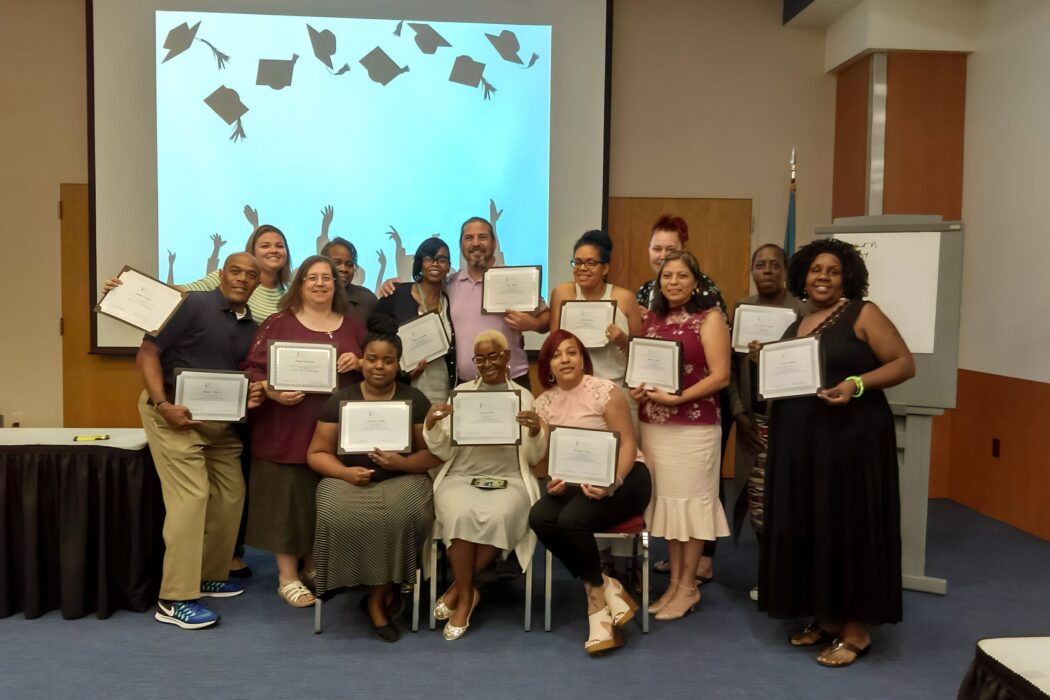
Community health workers (CHWs) celebrating with their certificates after completing a CHW training.

COMMUNITY HEALTH WORKER ACADEMY

The Community Health Worker (CHW) Academy is IPHI’s training institute dedicated to expanding the public health workforce. The CHW Academy is a Zee Turner Center for Community Health Workers initiative.

At the Zee Turner Center for Community Health Workers, we believe that a strong, well-supported CHW workforce transforms communities. Our training programs are designed to equip CHWs, CHW look-alike roles, supervisors, and organizations with the skills, confidence, and tools they need to excel in today’s evolving health and social service landscapes. 

Whether you’re just beginning your journey as a CHW, seeking advanced skills, supervising a team, or integrating CHWs into your organization, our training courses offer practical knowledge, real-world strategies, and a supportive learning community. 

We offer a full suite of learning opportunities, including: 

  • CHW Core Training – foundational skills for new or emerging CHWs 
  • CHW Continuing Education – specialized, advanced, and skills-focused learning 
  • Supervisor Training – tools for leading, developing, and supporting CHW staff 
  • Team Integration Training – strategies for building strong, effective CHW-inclusive teams 
  • Customized Training – for organizations seeking training to meet unique community needs, health issues, organizational goals, and workforce strengths 

Explore our training offerings—and if you have questions, ideas, or want to tailor a program for your team, we’d love to hear from you. Let’s strengthen the CHW workforce together. 

CHW Core Competency Training

Nationally and regionally recognized, IPHI is the leading resource in CHW workforce development and the design, coordination, and evaluation of CHW initiatives. IPHI has trained over 1,500 CHWs, provided training and technical assistance to dozens of CHW employers and supervisors, developed and implemented over 15 CHW-based interventions, and directly employed close to 200 CHWs.

To learn more about the program, click here.

Continuing Education Courses

The Institute for Public Health Innovation invites you to join our Community Health Worker (CHW) Leadership Institute—a FREE program designed to empower experienced and dedicated CHWs. The program will provide the skills and knowledge needed to take on leadership roles and influence community and system change. To learn more about the program, click here.

Supervisor Training

The Institute for Public Health Innovation invites you to join our Community Health Worker (CHW) Leadership Institute—a FREE program designed to empower experienced and dedicated CHWs. The program will provide the skills and knowledge needed to take on leadership roles and influence community and system change. To learn more about the program, click here.

Team Integration Training 

The Institute for Public Health Innovation invites you to join our Community Health Worker (CHW) Leadership Institute—a FREE program designed to empower experienced and dedicated CHWs. The program will provide the skills and knowledge needed to take on leadership roles and influence community and system change. To learn more about the program, click here.

Community Health Worker (CHW) Leadership Institute

The Institute for Public Health Innovation invites you to join our Community Health Worker (CHW) Leadership Institute — a unique program designed to empower experienced and dedicated CHWs. The program will provide the skills and knowledge needed to take on leadership roles and influence community and system change. To learn more about the program, click here.


To learn more about the Community Health Worker Academy, please contact [email protected].

Prince George’s County Food Equity Council

Fresh fruits and vegetables

PRINCE GEORGE’S COUNTY FOOD EQUITY COUNCIL

The Prince George’s County (PGC) Food Equity Council (FEC) is a local food policy council in Maryland that cultivates justice and economic opportunity from farm to fork to help residents grow, sell, and choose healthy food. The FEC is incubated and fiscally sponsored by the IPHI.

Prince George's County Food Equity Council logoThe FEC is a group of hometown leaders and changemakers committed to bringing better food to every fork. Since 2013, the FEC has been a voice for county residents at the policymaking table. FEC members work with county leaders to find permanent solutions to improve the food system. The FEC focuses on systematic and sustainable changes to Prince George’s public health challenges (i.e. hunger, obesity, and areas of the county that lack healthy food options) by advocating for policies that create a more equitable local food system.

Mission

The FEC mission is to significantly improve the public health and community well-being of all who live, work, study, worship, and play in the county. We develop and support policies, approaches, procedures, practices, and initiatives that create systemic change in the local food system. Our efforts include promoting health, economic opportunity, food security, and well-being within communities that the current food has negatively impacted.

Vision

Our vision is that every resident in Prince George’s County, regardless of race, class, or zip code, can easily access healthy, affordable, culturally-appropriate, and locally produced foods. All food workers, whether they work on farms, in restaurants, or in stores, can expect safe working conditions and living wages. Finally, growers that supply residents with locally grown food will stay on their land and access profitable markets of multiple scales.

To learn more about the Prince George’s Food Equity Council, please contact  [email protected] or visit: www.pgcfec.org.