
Institute for Public Health Innovation (IPHI) Logo

WeConnect

Old people's companions To unwind during the weekend, gather together for activities like singing, playing the guitar, and chit-chatting.

WeConnect

WeConnect was a Ryan White Part A funded project that increased accessibility to Early Intervention services, Psychosocial, and Medical Transportation Services to people living with HIV/AIDS (PLWHA) throughout the entire Eligible Metropolitan Area of Washington, D.C. (EMA).

This is a sunset initiative (no longer active).

The strategies included:

  • Recruiting, training, and placing 6-8 Community Health Workers (CHWs) at clinical and community-based host sites across the EMA;
  • Interconnecting with IPHI’s existing CHW initiatives in the District of Columbia, Northern Virginia, and Prince George’s County, Maryland to create an integrated regional system;
  • Concentrating CHWs in areas with unmet needs, unique barriers to care, and limited existing EIS resources;
  • Creating a broad regional network of providers; and
  • Integrating group-based psychosocial support and transportation services in strategic locations for key populations.

WeConnect CHWs were placed at the following sites across the EMA:

  • MedStar Washington Hospital Center in Washington, D.C.
  • Us Helping Us in Washington, D.C.
  • Prince George’s County Hospital – Glenridge Clinic (Dimensions Hospital System)
  • Prince George’s County Health Department, Maryland
  • Montgomery County Health Department, Maryland
  • AIDS Response Effort serving Northwest Virginia and West Virginia
  • Shenandoah Community Health in Martinsburg, West Virginia

In addition, psychosocial services through CHW-facilitated psychosocial support groups were offered at:

  • La Clínica Del Pueblo, Washington D.C.
  • Us Helping Us, Washington D.C.
  • Alexandria Neighborhood Health Services, Virginia
  • Fredericksburg Area HIV/AIDS Support Services, Virginia
  • Shenandoah Community Health, West Virginia

Evaluation

IPHI evaluated these projects, and captured the process and client-level outcomes for these initiatives. By integrating this project into IPHI’s HIV linkage and retention in care activities, IPHI led a regional EIS system that included over 30 CHWs. The team covered nearly every jurisdiction in EMA.

To learn more about WeConnect, please contact Senior Program Director Christine Stewart at [email protected] or 202.747.3512.

Total Health Partners

Happy businesswoman in wheelchair presenting new ideas on whiteboard to colleagues in the office.

Total Health Partners

Total Health Partners (THP) (2012-15) was an initiative in Prince George’s County (PGC), Maryland, that combined two projects, a linkage to care project funded by Kaiser Permanente Community Benefit Fund at East Bay Community Foundation and a retention in care project funded by AIDS United, M.A.C. AIDS Fund, and Washington AIDS Partnership.

This is a sunset initiative (no longer active).

The effort was a partnership with:

  • Heart to Hand Inc., a community-based organization
  • Greater Baden Medical Services, a Federally Qualified Health Center
  • University of Maryland Prevention Research Center
  • Prince George’s Hospital – Glenridge Clinic (Dimensions Health System)

IPHI employed five community health workers (CHWs) in PGC who pursued various short-term activities. The CHWs typically worked 6 – 12 months or until program participants were fully engaged in HIV care. Total Health Partners CHWs:

  • Found people living with HIV/AIDS (PLWHA) who were not receiving medical care;
  • Built peer-based trust and provided information about living with HIV;
  • Provided personalized assistance to help PLWHA enter and navigate service systems;
  • Supported PLWHA throughout the early part of their care until they became fully engaged in that care; and
  • Facilitated linkage to housing and financial wellness training workshops.

The model also incorporated a training series, “My Health, My Life, My Future,” for clients on housing, financial capability, and promotion of mental health and wellness.

To learn more about Total Health Partners, please contact Program Director Abby Charles at [email protected] or 202.747.3512.

Positive Pathways

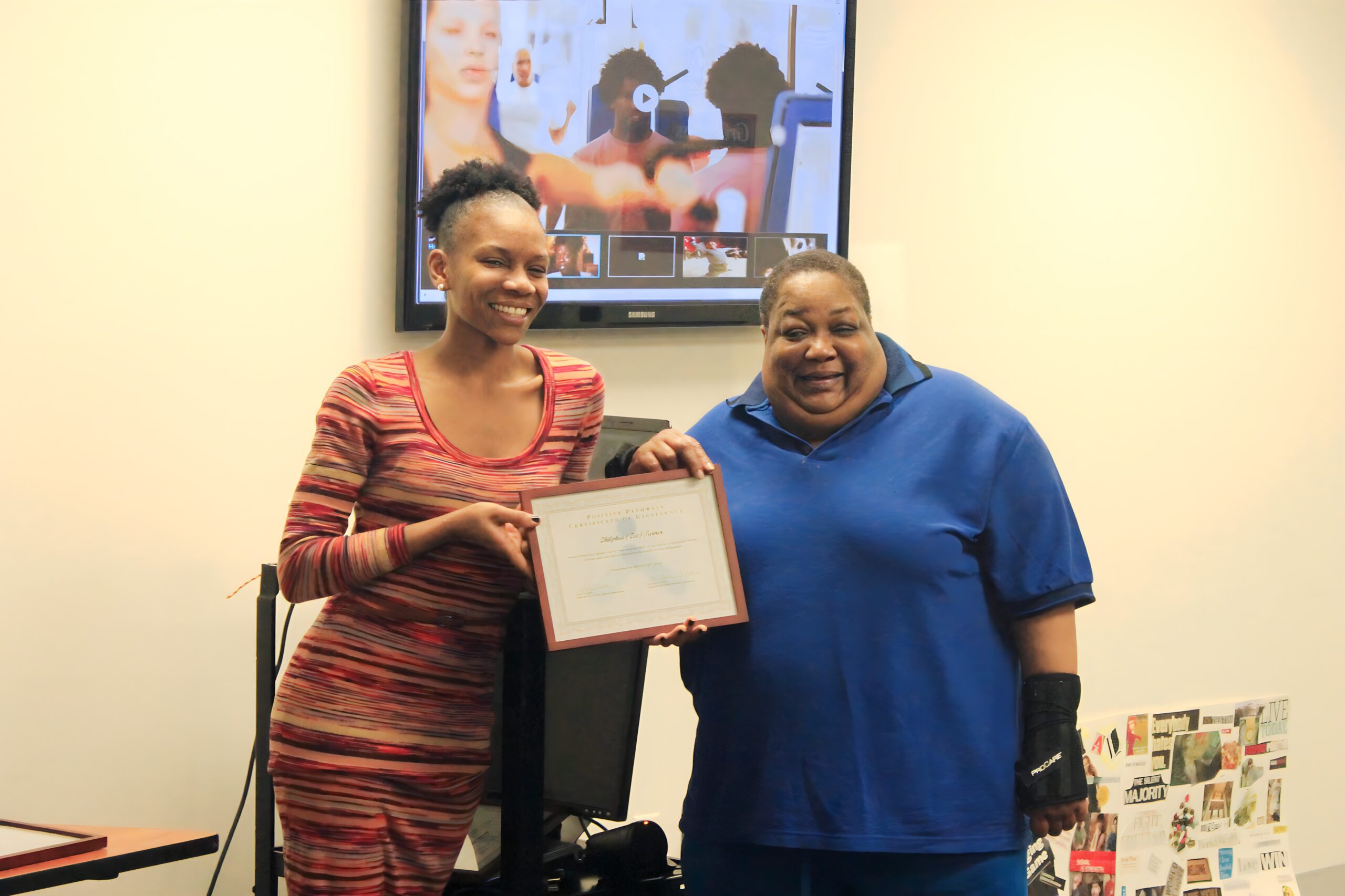
IMG_6376.remini-enhanced

Positive Pathways

Positive Pathways (2011-2015), was a collaborative initiative of Washington AIDS Partnership, IPHI, and HIV service providers across the District of Columbia (D.C). and Prince George’s County (PGC), Maryland. The initiative assisted over 1,300 HIV-positive African Americans in accessing and receiving HIV medical care and other support services.

This is a sunset initiative (no longer active).

AIDS United funded Positive Pathways through a 5-year grant from 2011 through 2015  from the Social Innovation Fund, a federal initiative based at the Corporation for National and Community Service. Other funders provided matching funds, including the Consumer Health Foundation, District of Columbia Department of Health, John Edward Fowler Memorial Foundation, Kaiser Permanente of the Mid-Atlantic States, M∙A∙C AIDS Fund, Morris and Gwendolyn Cafritz Foundation, and World Bank

Watch the Positive Pathways development video below:

Using Trained Peers to Complement Conventional Medical and Outreach Strategies

Positive Pathways established a network of trained peer Community Health Workers (CHWs) placed in clinical and non-clinical settings to identify and support out-of-care HIV-positive individuals. Positive Pathways sites included AmeriHealth Caritas DC, Family & Medical Counseling Services, Whitman-Walker Health, The Women’s Collective, and Unity Health Care, among others. The CHWs focused on building peer-based trust and informing individuals about living with HIV, providing personalized assistance to help them enter and navigate service systems, and supporting them throughout the early part of their medical care until they became fully engaged.

Over 75% of Positive Pathways clients were women.  

Positive Pathways evaluation results showed that 12 months after enrollment, 78% of participants had a suppressed viral load.  The evaluation also showed a reduction in particular reported needs after 12 months in the program. For example, at 12 months, the percentage of program participants needing housing or shelter was cut nearly in half to 13%. Similarly, participants reported reductions in barriers to care at 12 months compared to enrollment. At enrollment, 13% of clients cited no barriers to care, compared to 49% percent of participants after 12 months in the program.

To learn more about Positive Pathways, please contact Program Director Abby Charles at [email protected] or 202.747.3512.

Healthy Montgomery Transforming Communities Initiative

Happy native American young woman smiling in camera

Healthy Montgomery Transforming Communities Initiative

The Healthy Montgomery Transforming Communities Initiative (TCI) was a 5-year collaborative effort to implement policy, systems, and environmental changes to reduce obesity, promote tobacco-free living, and create healthier communities in Montgomery County, Maryland.

This is a sunset initiative (no longer active).


Healthy Montgomery TCI was coordinated by the Institute for Public Health Innovation in partnership with Holy Cross Health, the Montgomery County Department of Health and Human Services, Montgomery County Public Schools, the Montgomery County Department of Transportation, Primary Care Coalition, Montgomery County Food Council, and numerous other community partners.

The Montgomery County initiative was one of six funded nationally by Trinity Health. Funding was also provided by the Maryland Community Health Resources CommissionThe Morris & Gwendolyn Cafritz Foundation, and the Healthcare Initiative Foundation. We also thank other supporters of the TCI, including Business Leaders Fighting Hunger and Kaiser Permanente of the Mid-Atlantic States.

We invite you to view the video below highlighting these successful partnerships:

To learn more about the Healthy Montgomery Transforming Communities Initiative, please contact Program Director Evelyn Kelly at [email protected] or 202.407.7086.

Community Transformation Grant

man-shopping-at-grocery-store-2022-11-16-06-08-09-utc

Community Transformation Grant

In 2012, IPHI was awarded a two-year Community Transformation Grant (CTG) from the Centers for Disease Control and Prevention (CDC) to work with a broad range of partners in Prince George’s County, Maryland, to reduce chronic disease in an area of the county with the highest disease burden.

This is a sunset initiative (no longer active).


The team worked in Prince George’s County, Maryland, to reduce chronic disease rates, prevent the development of secondary conditions, and address health disparities with complementary policy, environmental, programmatic, and infrastructure activities to create health equity and optimize health outcomes. These activities focused on neighborhoods within and surrounding Langley Park, Suitland/Coral Hills, and Bladensburg/East Riverdale. We implemented seven strategies in the areas of Active Living, Healthy Eating; High-Quality Clinical Preventive Services; and Healthy and Safe Physical Environments, as well as an overarching strategy that created an infrastructure component within the County. Three additional mini-grants were awarded to implement more work in wellness policies, no-smoking policies, and pedestrian safety.

The strategies goals were to:

  • Improve access to affordable and healthy food
  • Increase the number of people covered by health systems to support control of high blood pressure and high cholesterol
  • Increase the number of people with access to safe physical environments

In order to guide and support the planning, implementation, and evaluation of the collective CTG effort, we formed a cross-sector leadership team. The leadership team included a diverse set of high-level stakeholders with the influence to leverage political and other resources necessary to advance policy and systems change in Prince George’s County.

Download the CTG Highlights Brochure for a summary and list of accomplishments for each strategy, quotes from stakeholders, and photos from our events.

Maryland Food Charter Project

DSC01253

Maryland Food Charter Project

Organizations and food coalitions throughout Maryland are working on issues ranging from urban agriculture to food recovery. IPHI and a diverse group of stakeholders worked to foster collaboration and collective action for a healthy, just, and sustainable food system in Maryland.

This is a sunset initiative (no longer active).

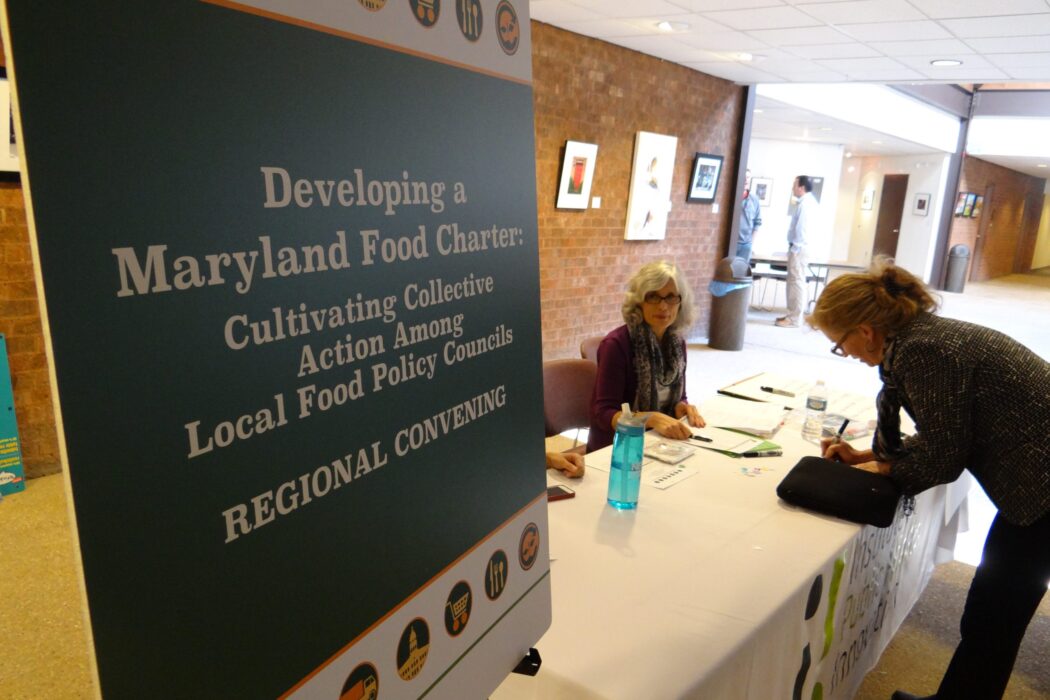
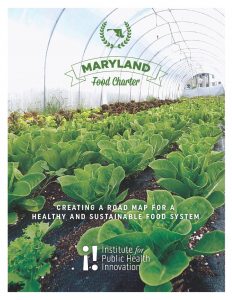
The collaborative effort led to the October 2017 release of the Maryland Food Charter.  The Maryland Food Charter resulted from a three-year undertaking and contains recommendations that were developed based on public input from all regions of Maryland, the “Milan Urban Food Policy Act,” and the Harvard Food Policy and Law Clinic “Maryland Food Policy Scan.” They are categorized to align with five food system sectors: production and processing, distribution, access, consumption, and recovery. These recommendations, if used as guidelines for policymakers and organizations working throughout the food system, can help build a more robust, equitable, and economically viable food system.

In order to guide and support the initiative’s planning, implementation, and evaluation, we formed an Advisory Committee to provide input and guidance on the project, leverage partners, and facilitate collaboration among food system sectors. Members of the Committee include representatives from multiple food system sectors and interests.

First Phase

During the first phase of the project, we conducted a series of regional convenings combined with key informant interviews with food and farm stakeholders across all regions of the state. These community leaders outlined dozens of goals and strategies to create an optimal food system. We then hosted the first statewide Food Summit in Maryland in fall 2015, bringing together multiple sectors and food system interests to discuss, develop, and refine the recommended goals and strategies.


Second Phase

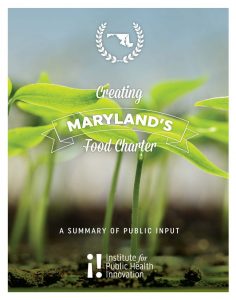
For the second phase, we focused on raising awareness and engagement among legislators about the Maryland Food system. In fall 2016, IPHI released Creating Maryland’s Food Charter: A Summary of Public Input, a document summarizing the results of a 10-month public process to develop content for Maryland’s first Food Charter. The document includes input from hundreds of food policy stakeholders from across the state’s five main regions (Western, Capital, Central, Southern, and Eastern Shore).


Prior to the launch of the Maryland Food Charter, we hosted a series of events. In March 2017, IPHI teamed up with the Johns Hopkins Center for a Livable Future and the Harvard Food Law and Policy Clinic to host a Maryland Food Charter Workshop. At the Workshop, Harvard presented preliminary findings on the September 2017 report, The State of Food Policy in MarylandIn summer 2017, we, along with Baltimore’s Office of Sustainability, and the Mayor of Baltimore, hosted a tour for state legislators showcasing Baltimore City’s Food Systems to showcase the importance of food policy and state and city investments to the health and wellbeing of Maryland communities.

Culminating three years of hard work and community participation, we released the Maryland Food Charter. The final document includes information and recommendations supported by a Maryland Food Charter Infographic Series highlighting key aspects of the food system and its role on people, the environment, and the economy. From production, distribution, access, consumption, and recovery, these facts, figures, and images help tell Maryland’s Food Charter story.

This initiative was made possible through a grant awarded by the Town Creek Foundation.

To learn more about the Maryland Food Charter, please contact Program Director Evelyn Kelly at [email protected] or 202.407.7086.

RVA Breathes

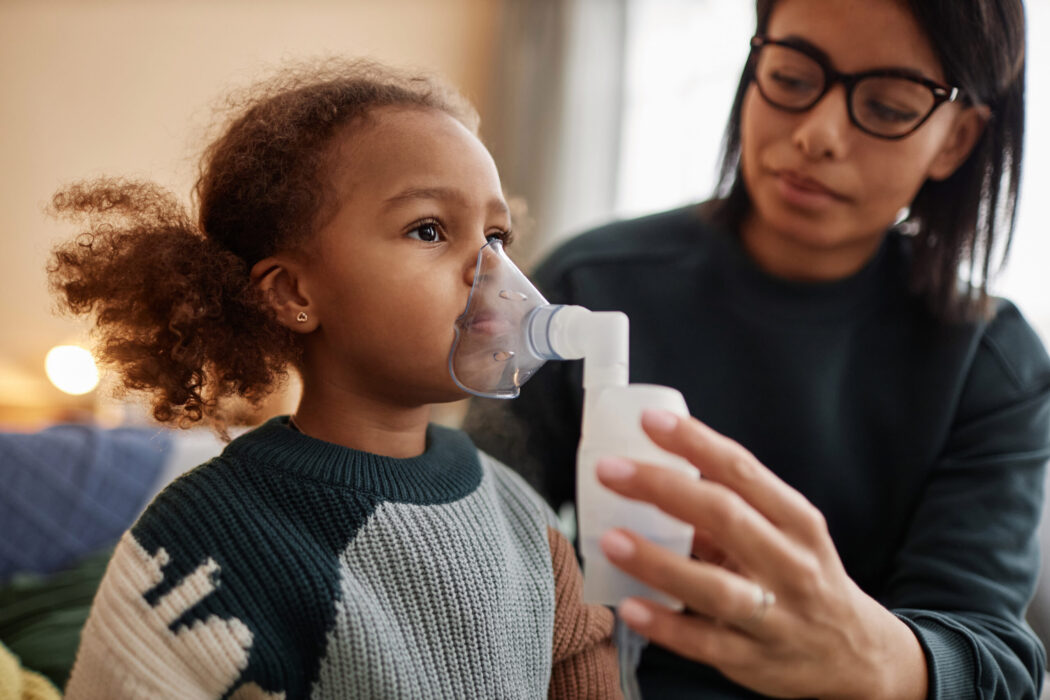
Medium close up shot of little African American girl inhaling medicine through nebulizer while defocused mom holding face mask on daughters face

RVA BREATHES

IPHI partnered with the Virginia Commonwealth University (VCU) Department of Psychology to implement of RVA Breathes. This program was a six-year NIH-funded research grant to assess the impact of evidence-based interventions on families with a child with uncontrolled asthma in Richmond, Virginia.

This is a sunset initiative (no longer active).

Richmond, VA, is consistently ranked one of the most challenging places to live in the United States for those diagnosed with asthma.

This study sought to identify interventions to help Richmond-based families manage their child’s asthma. Working in partnership with a team of Healthy Homes Assessors from the Richmond and Henrico Health Districts (RHHD), IPHI community health workers (CHW) conducted home visits with families with a child with uncontrolled asthma. The team provided education on asthma self-management, establishing a medical home, identifying environmental triggers, and techniques to reduce asthma attacks. The team helped families identify and navigate resources to address health-related social needs.

The final post-intervention visits and data analysis remain ongoing, but current outcomes of interest include reduced emergency department utilization, unnecessary hospitalization, and increased school attendance and medication usage. Preliminary results showed:

  • Caregivers gained the confidence to manage asthma attacks and talk to their children’s doctors and school personnel.
  • Children became comfortable with talking about asthma with their parents and doctors.
  • Caregivers reported developing new strategies to improve medication adherence.
  • Caregivers frequently discussed the invaluable psychosocial support the CHW and Healthy Homes teams provided. Having someone to discuss challenges and fears helped to manage stress. Children felt supported in addressing challenges.

After this project, the VCU and RHHD teams worked together to develop a community-based asthma program model. With more flexibility and adaptability, the community-based program model is well-suited to meet parents where they are. Recognizing the pilot’s success, research project results, and the importance of sustaining this resource, RHHD has agreed to continue this intervention starting June 2022.

To learn more about RVA Breathes, please contact Senior Program Manager Rebecca Epstein at [email protected].

Chronic Heart Failure Care Transitions Project

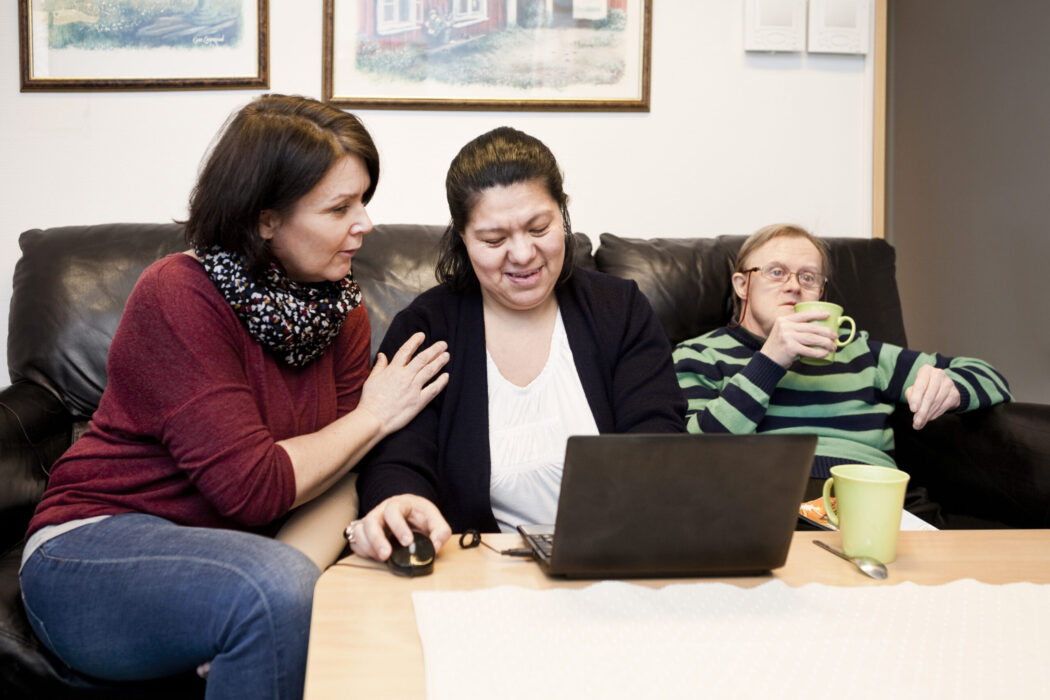
Community health worker helping a woman and man with down syndrome.

Chronic Heart Failure Care Transitions Project

A partnership to improve care transitions and health outcomes for patients with chronic heart failure.

This is a sunset initiative (no longer active).


Reducing avoidable hospital readmissions is an opportunity to improve quality, increase patient satisfaction, and reduce costs within healthcare systems. Since 2013, IPHI has partnered with the George Washington University and GW Medical Faculty Associates to improve care continuity and coordination and to reduce hospital readmissions for patients with chronic heart failure.

IPHI is responsible for administering the community health worker (CHW) portion of this project. This work focuses on evidence-based strategies emphasizing coordination and continuity of care, prevention and complication avoidance, and close clinical treatment.

Responsibilities:

  • Hiring & placing the CHWs;
  • Supporting CHW training;
  • Training GW Hospital and Medical Faculty Associates staff on effectively integrating CHWs into the team;
  • Collaborating to ensure effective program model design; and
  • Evaluating this pilot project.

Two CHWs hired have been trained in basic heart failure treatment support. CHWs are deployed to assist patients during and after discharge from the hospital. With supervision by heart failure physicians and nurse practitioners, the CHWs work with the patients in their homes to:

  • Improve understanding of heart failure medications;
  • Enhance diets that are conducive to improved health;
  • Improve heart failure self-management skills;
  • Provide resources to address social needs; and
  • Improve communication with and utilization of outpatient medical facilities.

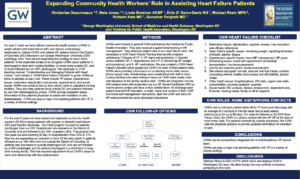
To learn more about expanding the CHW role in assisting heart failure patients, click: here.

For hospitals interested in developing a similar program to ensure effective healthcare use, control costs, and improve patient health outcomes, please contact [email protected] or 202.747.4120.

COVID-19 Response & Recovery

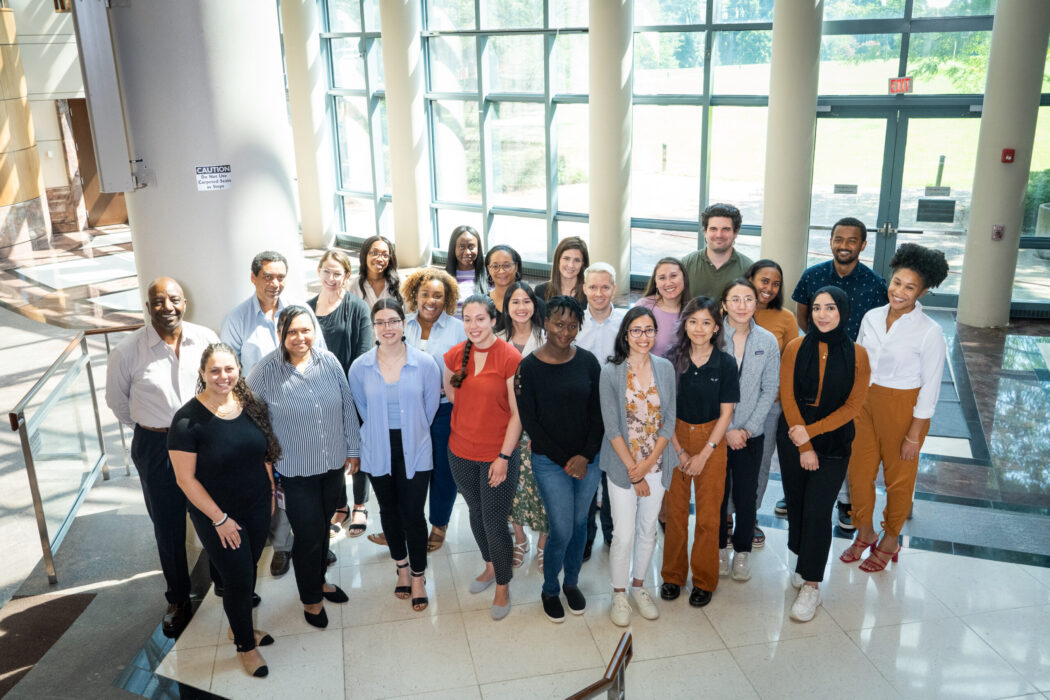
IPHI employees (Fairfax County office) from a birds eye view.

COVID-19 Response & Recovery

In May 2020, Fairfax County Health Department in Virginia turned to IPHI to assist with swiftly building up its workforce capacity to respond to the pandemic (see the Health Department’s initial press release).

Within less than a month, IPHI recruited, employed, and trained 80 new staff on behalf of Fairfax County. By the end of January 2021, IPHI had hired over 640 employees.  This new surge workforce included case interviewers, contact interviewers, community health workers, epidemiologists, environmental health specialists, call center staff, wellness specialists, and over 50 response team managers.  As the pandemic response shifted to include an emphasis on COVID-19 vaccine access, team members were trained and shifted to support vaccine outreach, education, and provision.

IPHI developed a week-long training program for case and contact interviewers that wrapped around an online, self-guided course offered by Johns Hopkins University.  IPHI also created a separate training program for COVID-19 community health workers.  IPHI’s curricula ensured new hires had the opportunity to practice what they were learning through interactive, adult learning methods.  The IPHI courses were so well-received the health department asked IPHI to include over 250 government employees in the program as well, beyond the IPHI-employed staff. Over the course of its involvement, IPHI has trained well over 1,400 pandemic responders.  In March 2021, the National Network of Public Health Institutes published an article on IPHI’s training program.

In the late summer of 2021, it became clear that a second boost in workforce capacity was required to respond to a new surge in COVID-19 cases in Fairfax County and across the Commonwealth of Virginia due to the Delta variant and, later, Omicron.  IPHI hired and trained hundreds of additional workers in the fall of 2021 who were deployed to not just Fairfax County Health Department but 22 additional Local Health Districts across Virginia.

IPHI has learned a number of key lessons from this work thus far, including:

  • Public/private partnerships can provide efficiency and agility to governmental efforts to expand capacity and effectively respond to public health emergencies.
  • While there is pressure to ramp up quickly, governments and their partners should invest in sufficient upfront training to improve performance and staff satisfaction.
  • Community health workers have a vital role to play in emergency response.

“IPHI is an essential partner in the Health Department’s efforts to contain COVID-19 in Fairfax County.  Recruiting, employing and training hundreds of staff in just a few short months was no small feat. Due to the critical support and capacity IPHI provided, we were able to focus on our role leading the Emergency Response.”
— Gloria Addo-Ayensu, MD, MPH, Director of Health for Fairfax County

To learn more about IPHI’s COVID-19 response and recovery, please contact Senior Director Carolyn Padovano at [email protected].

Health Equity Consultant for Nemours Foundation

Three boys wearing soccer gear are stretching on the field.

Health Equity Consultant for Nemours Foundation

IPHI served as an equity consultant for Nemours Children’s Health System CDC-funded Healthy Kids, Healthy Future (HKHF) initiative for four years.

This is a sunset initiative (no longer active).

Healthy Kids, Healthy Future logo


HKHF partnered with state-level early care and education (ECE) coalitions of agencies and organizations integrating obesity prevention policies and systems into ECE settings.

IPHI provided core equity training to state-level coalitions throughout the nation. The training used a 16-hour Healthy and Equitable Communities (HEC) curriculum, then provided follow-up technical assistance to support integrating equity tools and concepts into coalition strategies. IPHI worked with seven states through HKHF on the following:

  • Health Equity Research / Data
  • Coalition Building and Support
  • Survey Design / Development
  • Strategic Planning
  • Community Engagement
  • Equity Committee Development

IPHI supported Nemours HKHF with the following technical assistance :

  • Michigan and Florida –
    • Provided consultative services to advise on the logistics and communications needed to coordinate each state’s Healthy and Equitable Communities Workshop sessions. IPHI coordinated participant registrations via IPHI’s Learning Hub system and distributed pre- and post-assessment surveys to assess participant knowledge levels around various equity topics. After the workshops, IPHI provided a comprehensive training report summarizing data from the workshop sessions and providing recommendations for future improvements.
  • Kansas –
    • Provided consultation on the development of a position description for a newly created Equity Consultant role. IPHI leveraged best practices for job descriptions to co-create an accurate and detailed position description in collaboration with our client partner.
  • Alabama –
    • Attended several strategic planning discussions to assess the needs to support re-assembling their member coalition. Discussions centered around potential technical assistance support areas, including the development of a member survey, assistance with a strategic plan, coalition re-engagement strategies, and expanding diversity of coalition members.
  • Pennsylvania Keystone Kids Go (KKG)
    • Reviewed prior member survey data and advised the development of an enhanced member survey to embed an equity focus. IPHI evaluated the client’s mission, values statement, and strategic plan and advised on opportunities to increase emphasis on equity language and methods. Provided guidance on methods to engage additional coalition members, ensuring representation from diverse organizations. IPHI assisted our client with developing a steering committee and advised on plans for the re-engagement of their coalition members. Also developed plans for the KKG’s annual member meeting. For the annual meeting, IPHI developed presentation materials and facilitated consensus discussions to ensure a path forward in building equity into their strategic plan.