Institute for Public Health Innovation (IPHI) Logo

National Public Health Week 2022

April 4-10, 2022, marks the 27th National Public Health Week (NPHW) organized by the American Public Health Association (APHA). During this observation, we recognize the contributions of public health and highlight issues that are important to improving our nation.

This year’s theme is “Public Health Is Where You Are.” The places where you are physically, mentally, and societally affect your health and life. Ensuring everyone has a chance at a long and healthy life means tackling the underlying causes of poor health and disease risk with an intersectional approach. We must focus on inclusion and equity to ensure decisions are made with everyone’s health in mind. From here, we can build healthier communities and, eventually, the healthiest nation.

Serving the District of Columbia, Maryland, and Virginia, IPHI has created partnerships across sectors and cultivates innovative solutions that improve health and well-being for all populations and communities throughout the region, particularly those most affected by health inequities.

We invite everyone – public health professionals, students, elected leaders, and the general public – to celebrate with us this NPHW! Learn more about NPHW and follow along as IPHI highlights two programs for each day’s theme.

Daily Themes 

Monday: Racism

Tuesday: Public Health Workforce

Wednesday: Community

Thursday: World Health Day

Friday: Accessibility

Monday, April 4 – Racism: A Public Health Crisis

It’s not a debate. Racism IS a public health crisis. Declaring racism as a public health crisis is essential to advancing racial equity and justice, followed by allocating resources and strategic action. The historic and present-day impact of racism and other forms of oppression has created dramatic differences in health across populations and communities. The twin pandemics of COVID-19 and systemic racism have only made disparities more pronounced. Together, we can dismantle oppressive policies and systems that lead to racial disparities in health. Read the op-ed, “Virginia Must Declare Racism As A Public Health Crisis,” written by IPHI’s own Dr. Michael Royster and Voices’ Chloe Edwards. Learn more about two important programs that help IPHI recognize racism as a public health crisis:

  • IPHI is one of the project partners for “Stronger Partnership, Stronger Community (Stronger2),” a Fairfax County Virginia Health Department-led initiative to improve health literacy among local African-American, Black, and Hispanic communities. For more information, visit.
  • At IPHI, our Healthy and Equitable Communities Training provides resources and technical assistance to organizations/coalitions committed to addressing the dramatic health inequities found in communities throughout our region. For more information, visit.

Tuesday, April 5 – Public Health Workforce: Essential to our Future

The public health workforce is necessary to address our present and future health challenges.  Public health programs need the support and involvement of the communities they serve, so building public trust and confidence is crucial to building healthy communities. Community Health Workers (CHWs) are trained community members with a trusting, and often unique relationship with the community served, and they’re an integral part of IPHI’s work. They act as links between community residences and the health care system. Expanding the community health workforce improves the public health workforce, making them essential to our future. Learn more about two important projects that IPHI helps to add capacity to our public health workforce:

  • In seven months IPHI recruited, employed, and trained over 640 people as a part of the Fairfax County COVID-19 Public Health Emergency Response. As the pandemic response shifted to include an emphasis on COVID-19 vaccine access, IPHI has additionally trained approximately 1,000 pandemic responders and others within the County on vaccine outreach and education. For more information, visit.
  • Through the DCPG vaccinate program, a one-year grant sponsored by Health Resources & Service Administration (HRSA), IPHI is able increase COVID-19 vaccinations in high-need areas of the District of Columbia and Prince George’s County, Maryland. For more information, visit.

Wednesday, April 6 – Community: Collaboration and Resilience

Community encompasses every aspect of our lives, including our health. The pandemic has encouraged communities to stand together, even if socially distanced, to navigate the hardships of these unprecedented times. There must be an emphasis on community-led, collaborative solutions that contribute to systemic change, build resilience, and shift power in communities. Through our collaborative work with programs and partnerships, we’re expanding healthy equity to one community at a time for a healthier region. Learn more about two important programs that emphasize IPHI’s commitment to community collaboration:

  • IPHI’s initiative, the Prince George’s County Food Equity Council (FEC), is a local independent food policy council of 22 local leaders working to improve public health and community well-being for Prince George’s County, Maryland. The FEC launched three cold storage trailers in the past year to ensure fresh food is available to those in need and served on the Prince George’s County food security task force to highlight 11 recommendations to improve food security. For more information, visit.
  • IPHI is a part of the DC Healthy Housing Collaborative, a multisector coalition addressing substandard housing conditions that contribute to significant health issues affecting District residents. The collaborative works to ensure that everyone has a fair and just opportunity to be healthy no matter where they live. Next month, the Collaborative will support Asthma and Allergy Day Capitol Hill on May 3-4, 2022. For more information, visit.

Thursday, April 7 – World Health Day: Health is a Human Right

Today is a global observance of health as a human right. This human right means that everyone should have access to the health services they need, when and where they need them, without prejudice or discrimination. When certain groups are excluded or treated unequally, their physical and mental health suffers. From healthcare professionals to policymakers and individuals, community members, or community leaders, we all have a role to play in our personal health and the wellbeing of those around us. Learn more about two important programs that encompass IPHI’s work to ensure health is a human right:

  • Healthy Montgomery is a community health improvement process (CHIP) that improves access to health and social services and enhances physical and social environments to support optimal health to achieve health equity for all residents. IPHI works with several partners to identify and describe health disparities in the county’s populations, identify unmet health needs, and develop and implement action plans to meet those needs. The focus areas are:
    • Obesity
    • Behavioral health
    • Diabetes
    • Cardiovascular disease
    • Cancer
    • Maternal & infant health

For more information, visit.

  • IPHI has partnered with numerous organizations to hire community health workers under Community Health Workers (CHWs) for a Healthy Virginia. The project is funded by the Center for Disease Control and Prevention (CDC) in partnership with the Virginia Department of Health (VDH) with the goal to assist at-risk communities and populations as they respond to and recover from COVID-19. For more information, visit.

Friday, April 8 – Accessibility: Closing the Health Equity Gap

As the health equity gap continues to grow, communities face glaring disparities in health and health care accessibility. By reducing health disparities in health insurance, increasing physical accessibility to care, increasing availability of appropriate care, building more inclusive public health programs, and promoting healthy living, we can improve the health of marginalized groups. Learn more about two important programs that exemplify IPHI’s commitment to closing the health equity gap:

  • IPHI’s commitment isn’t just about doing the work, it’s also about sharing our knowledge with organizations and coalitions to address dramatic health inequities in our region. Our Health and Equitable Communities Training fuses theory with practice and allows participants to apply the knowledge and tools presented in training to be implemented in their everyday work to create healthy, equitable, thriving communities. For more information, visit.
  • Under RVA Breathes, IPHI worked with Virginia Commonwealth University (VCU) and Richmond Henrico Health District (RHHD) to employ four CHWs. The project is a six-year National Institutes of Health research grant that assessed the impact of evidence-based asthma interventions on children with uncontrolled asthma in Richmond. After a successful pilot, the project will be continued by RHHD in June 2022. For more information, visit.
Robert Wood Johnson Foundation’s Article on Public Health Institutes

The Institute for Public Health Innovation (IPHI) was identified as a public health institute example to follow, along with the Public Health Institute of Metropolitan Chicago. The article describes, “Public health institutes are nonprofit organizations that support efforts toward a more stable, robust, public health infrastructure to address health and social needs in the context of community amid intolerable barriers to good health along racial, ethnic, and other divides.”

Moving forward, New Jersey hopes to establish a state public health institute. Read more here, and be sure to check back for the Foundation’s request for proposals!

https://www.africanelements.org/news/how-can-we-prioritize-equity-in-public-health-rwjf/

IPHI Regional Virtual CHW Core Skills Training: Fall Session: September- October 2021

IPHI CHW Virtual Core Skills Competency Training (Fall Session: September – October 2021)


IPHI offers a 100hr. Core Skills Competency for CHWs in a variety of formats that are adaptable to agency and program needs including:

  • Human Rights, Equity & Perspective Transformation
  • Communication
  • Public Health Knowledge
  • Introduction to The CHW Role: CHW History, Roles, Skills, Tasks
  • CHW Legal and Ethical Issues
  • Data Collection and Medical Records
  • Teaching and Capacity Building Skills & Clinical Practice
  • Health Education and Prevention
  • Outreach and Advocacy
  • Resource Identification and Organization
  • Disease Management including Chronic Disease, Diabetes, Cardiovascular Disease, HIV, Mental Health and Substance Abuse, Trauma Informed Care, Asthma, Cancer and Reproductive Health

Dates and Time of Training:

  • Training Dates: September 13-October 21, 2021
  • Training Days: Monday thru Thursday, No Training on Fridays
  • Training Time: 10 am-3 pm with a 30min. Break

Cost:

Training Fee is $1,650.00 per attendee to be paid by September 13th. Once you are registered you or your agency will be invoiced. Payment can be split and both submitted no later than October 1st. You are very welcome to send the full payment in advance. All payments must be received by October 5th.

Attendance:

If you would like to attend, you must register by September 6, 2021. The fall session will hold 15 participants. Please register soon. YOU MUST ATTEND THE ENTIRE TRAINING in order to receive a certificate of completion and a letter verifying your training competencies.

Technology Recommendations:

You must have an up-to-date laptop or desktop with a working camera and microphone to participate in the training. We do not recommend completing this training on a cellphone or tablet

To register, click: HERE.


If you have any questions or need further information, please contact Program Coordinator Dwyan Monroe at [email protected].

IPHI’s Equity-Centered Training Program for Pandemic Emergency Responders

For the March 2021 issue of its publication Elevate, the National Network of Public Health Institutes (NNPHI) spoke with IPHI’s Dr. Carolyn Padovano and Christine Stewart to discuss IPHI’s health equity-centered training program for contact tracers and other COVID-19 emergency responders.

IPHI developed the training specifically its public/private partnership with Fairfax County Health Department in Virginia. To access this issue, click: HERE.

IPHI HOSTS MARYLAND’S FIRST STATEWIDE FOOD SUMMIT

Evelyn and Michael Humanim

IPHI HOSTS MARYLAND’S FIRST STATEWIDE FOOD SUMMIT

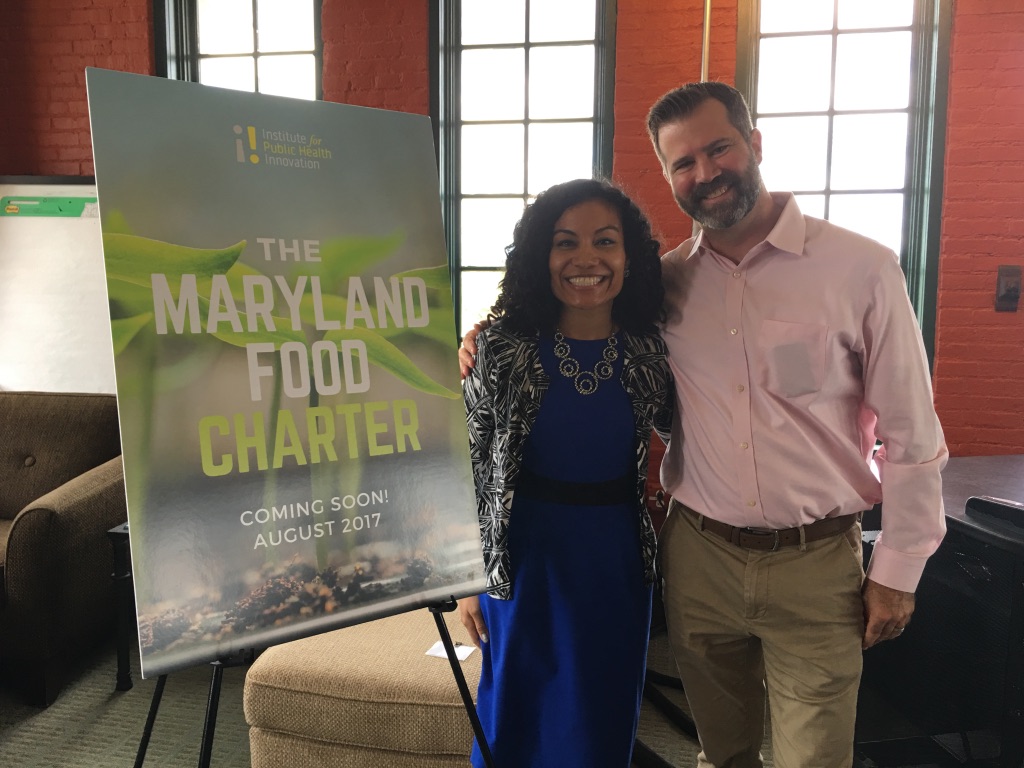
IPHI hosted Maryland’s first statewide food summit, Developing a Maryland Food Charter: Statewide Summit, on October 15, 2015. The event included nearly 60 participants from all five regions of the state.

The summit focused on the following: 

  • The current status of potential food systems issues at the state-level
  • An overview of the outcomes and themes that arose at the regional convenings
  • Finalizing and prioritizing the strategies across the five food system domains included in the Maryland Food Charter

What is the change you want to see? 

A panel of experts answered this question from Grow & Fortify, Southern Maryland Agricultural Development Commission, Baltimore Office of Sustainability, Maryland State Department of Education, and Center for a Livable Future. Their perspectives guided the development of the Maryland Food Charter.

All summit participants refined and strengthened strategies that were included in the first-ever food charter. They also assessed the feasibility of the collective action strategies.

To view and download the Maryland Food Charter, click: here.


CNE Hosts Oct Meeting of Rural Healthcare Development Network, IPHI President Michael Rhein Presents

On October 9th, the Rural Healthcare Development Network (RHDN) of Southern Virginia, an initiative coordinated by the Southern Virginia Higher Education Center’s (SVHEC) Center of Nursing Excellence, took another step forward in learning about the role of Community Health Workers in rural healthcare. Michael Rhein, President and CEO of the Institute for Public Health Innovation (IPHI), spoke with the group of healthcare educators, administrators, and policymakers on the work the Institute has done with Community Health Workers or CHWs.

For the full article, please visit http://www.svhec.org/nursing/cne-news

The Institute for Public Health Innovation Receives National Network of Public Health Institutes Grant

The Institute for Public Health Innovation Receives National Network of Public Health Institutes Grant

Grant will help IPHI develop new strategies to improve community health

September 15, 2014—Washington, DC—The Institute for Public Health Innovation (IPHI) has been awarded a grant by the National Network of Public Health Institutes (NNPHI) and the Robert Wood Johnson Foundation to fund a state forum designed to develop practical strategies to help improve the health of the communities the organization serves. The IPHI will use the grant to host a forum during the coming year focused on exploring the roles of community health workers (CHWs) in promoting population health and health equity in Virginia.

The IPHI is one of four grant recipients chosen through a competitive selection process that included a review by NNPHI’s national partner organizations. Other recipients include the University of Wisconsin Population Health Institute, the Health Policy Institute of Ohio, and the Georgia Health Policy Center.

“The goal of our organization is to promote better health and wellbeing for all people in Virginia, Maryland, and the District of Columbia,” explained Mike Royster, MD, MPH, IPHI’s Vice President, who is based in IPHI’s Richmond office. “This grant will help us bring together key stakeholders in Virginia to look at the vital role that community health workers play in improving the public’s health.” Research shows that integrating CHWs into health care services is associated with improved access to primary care, a reduction inhospital readmissions, and a positive return on investment. Forum attendees will also explore how to expand the roles of CHWs in Virginia by focusing on issues such as scope of practice, training, professional support, model development, and sustainability.

About the Institute for Public Health Innovation

Formed in 2009, IPHI is one of 38 member public health institutes within the National Network of Public Health Institutes (NNPHI). Across the country, public health institutes work in conjunction with public and private partners to protect and promote the public’s health by providing a range of functions from training to program development to research and evaluation. IPHI is the official public health institute serving the District of Columbia, Maryland, and Virginia, and has quickly grown into an important partner at the state and local levels across the region. To learn more about IPHI, visit our website.

Inaugural Class of HEAL Cities & Towns Recognized

IPHI Recognizes 22 HEAL Cities and Towns in Maryland and Virginia

HEAL Cities & Towns have publicly recognized, through adoption of a resolution or policy that municipalities have a role to play in creating a community where residents and municipal employees can make healthy decisions about nutrition and physical activity.

To date, 22 cities and towns from across Maryland and Virginia have joined the Campaign, including:  Bel Air (MD), Bladensburg (MD), Colmar Manor (MD), College Park (MD), Cottage City (MD), Charlottesville (VA), Crewe (VA), Dumfries (VA), Edmonston (MD), Forest Heights (MD), Gaithersburg (MD), Greenbelt (MD), Haymarket (VA), Leesburg (VA), Lovettsville (VA), Middleburg (VA), Petersburg (VA), Salisbury (MD), Somerset (MD), Staunton (VA), Sykesville (MD) Williamsburg (VA). (See map of HEAL Cities & Towns below.)

These municipalities have taken advantage of resources made available to them through the HEAL Cities & Towns Campaign, including: quarterly webinars, technical workshops, and staff assistance with policy development and implementation.

June was a big month for the HEAL Cities & Towns Campaign. On June 10, 2014, IPHI’s Marisa Jones had the opportunity to speak before Maryland’s local elected officials to present plaques recognizing the Inaugural Class of HEAL Cities & Towns in Maryland at the Maryland Municipal League Annual Convention.

Also at the Maryland Municipal League Convention, the HEAL Cities & Towns Campaign led two workshops. The first was a mobile session on walking meetings, answering: what are they? How can they promote the fiscal and physical health of municipalities? The second workshop highlighted the Economic and Health Benefits of Walkable, Bikeable Communities, and featured Maryland examples provided by Mayor Randy McClement, Frederick, MD, Councilwoman Nicole Wagoner, Cumberland, MD, and Matt Drew, Bike Salisbury. To view each presenter’s slides, please click on their name.