Institute for Public Health Innovation (IPHI) Logo

DC Vaccine Alliance

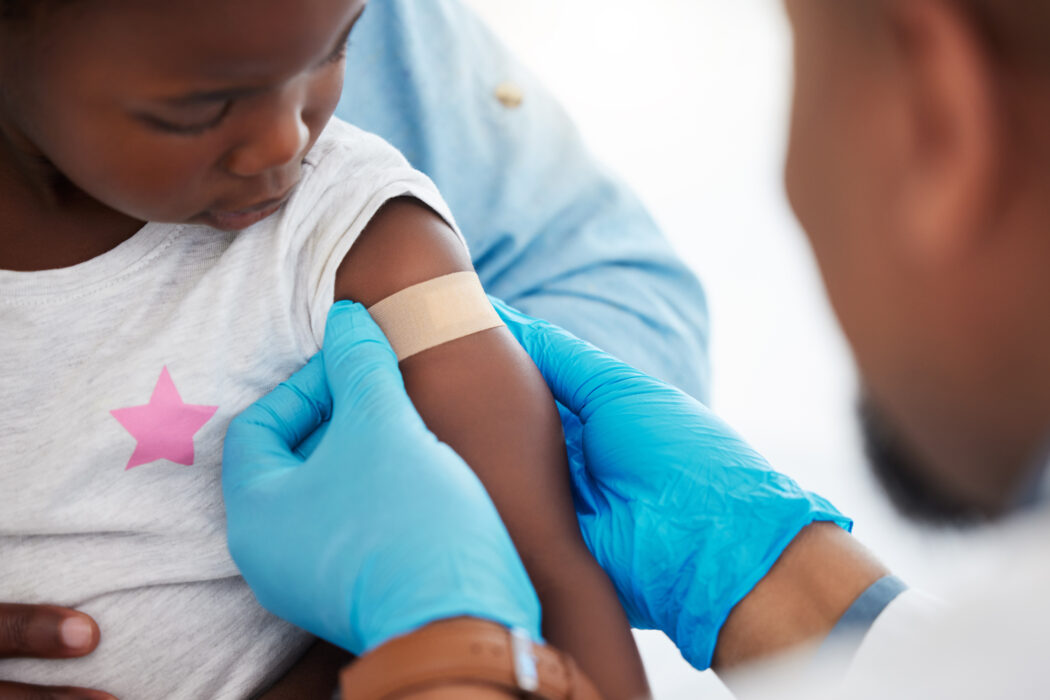
Doctor, healthcare worker and medical professional with plaster on arm of sick child after covid va.

DC Vaccine Alliance

The DC Vaccine Alliance, funded by DC Health, builds and sustains a coalition of immunization stakeholders dedicated to promoting vaccination across the District. 
The Institute for Public Health Innovation (IPHI) leads the DC Vaccine Alliance through a grant from DC Health. The coalition increases immunization rates and reduces vaccine-preventable diseases in Washington, DC. We bring stakeholders from diverse sectors together to educate healthcare providers and the community about vaccine best practices. 

 DC Vaccine Alliance priorities include: 

  • Understanding attitudes and perceptions around immunizations and awareness of school vaccination requirements 
  • Strengthening partnerships among immunization advocates to align messaging and outreach efforts 
  • Addressing barriers to vaccination and supporting providers in achieving recommended immunization coverage 
  • Enhancing access to accurate and up-to-date vaccine information through digital resources and community engagement 

The Alliance serves as a central hub for immunization initiatives, collaborating with key stakeholders to improve vaccine uptake across all populations. 

As a member, you engage through our three committees: 

  • Community Outreach – Builds public awareness and drives education efforts 
  • Advocacy – Strengthens policies that support vaccination efforts 
  • Provider Education – Enhances vaccination services and fosters provider collaboration 

If you’re interested in learning more or participating, contact us below or follow us social media:

To learn more about the DC Vaccine Alliance and how you can contribute to this important initiative, please contact us at [email protected]. 

CHW Leadership Institute

CHW Leadership Institute

The Institute for Public Health Innovation invites you to join our Community Health Worker (CHW) Leadership Institute—a program designed to empower experienced and dedicated CHWs. The program will provide the skills and knowledge needed to take on leadership roles and influence community and system change.

The CHW Leadership Institute is a six-month, cohort-based program that equips experienced community health workers to step into leadership roles and drive community and system-level change. Co-designed with CHWs and leadership experts, the Institute piloted in 2025, graduating six professionals who gained confidence, advanced career pathways, and mastered leadership competencies. Building on this success, we are preparing to launch future cohorts beginning in 2026. 

BY THE END OF THIS COMPREHENSIVE SIX-MONTH PROGRAM, YOU WILL:

  • Mastered Leadership Competencies 
  • Reported Increased Confidence in taking on new leadership roles and responsibilities  
  • Expanded Career Pathways with a deep understanding of how to apply leadership skills to pursue diverse opportunities

Interested in Joining a Future Cohort?

We are preparing to launch our next cohort in spring 2026. If you would like to receive updates or share your interest in the CHW Leadership Institute, please complete this interest form.

FREQUENTLY ASKED QUESTIONS:

We will continue to update Frequently Asked Questions as needed. Please review previous questions below to see if your question has been answered.

Will future Leadership Institute cohorts be free?

We hope to subsidize as much as possible; all qualified applicants will have access to scholarships. More details will be shared when the next application launches. .

How much will the Leadership Institute cost to participants?

While final tuition rates are not yet set, we are committed to keeping the program affordable and offering scholarships to ensure access for all qualified CHWs. 

How will future Leadership Institute offerings differ from the pilot?

We are considering feedback from participants, facilitators, and reviewing data to determine how to make the program even more impactful for future students! We may make changes to the schedule, length of program, add topics, or adjust features based on the feedback received. The structure of future Leadership Institute cohorts will be shared when applications are open.

What type of information will you ask in the application?

We have not updated the application yet, but you can expect to have to submit two letters of recommendation, and provide proof that you have completed core CHW training.

Do I need to be certified to apply to the CHW Academy Leadership Institute?

No, you do not need to be certified to apply. We know certification is not available in Washington, DC, and many other jurisdictions, and we did not want any otherwise experienced CHW within those jurisdictions to feel they could not apply.

Do you have questions about the Leadership Institute? Please reach out to [email protected] and indicate “Leadership Institute Question” in the subject.

VOA Older Adult Housing Technology Research Project

Smiling Senior Man Sitting On Sofa At Home

VOA Older Adult Housing Technology Research Project

Volunteers of America (VOA) partnered with IPHI to identify and assess the feasibility of integrating technology and health solutions in Southwest DC.  

IPHI partnered with Volunteers of America (VOA) to improve the quality of life for low-income older adults in Southwest DC.  

In 2028, VOA will open Buzzard Point, one of its most visible and innovative older adult housing developments. The 110-unit affordable housing will help address inequities and injustices for economically disadvantaged communities. The housing and services at Buzzard Point will support the health and well-being of its residents, enabling them to age safely in their homes and communities. This site will integrate technology, health, and housing to benefit a diverse population.  

IPHI identified and assessed the addition of technology and health solutions to create more supportive, engaging, and healthy living. This project will conduct research to understand the community’s needs, preferences, and challenges to develop targeted interventions that promote well-being, independence, and social connection. 

Our evaluation and research process involved a comprehensive approach, including: 

  • Community Engagement: Building strong partnerships with local organizations, advocates, and healthcare providers to ensure our work aligns with community needs and priorities. 
  • Data Collection: Gathering rich and diverse data through Photovoice, focus groups with various groups (e.g. advocates, local organizations, caregivers, healthcare providers, etc.), and interviews with technology experts. 

The team leveraged the project’s findings to advocate for policy, systems, and environmental changes that support healthy aging and digital equity. The team conducted research, completed the final evaluation in 2025, and launched the final report in 2026.  

This project was funded by the Humana Foundation and supported by a network of dedicated research and community partners, all working together to make a lasting impact on the lives of older adults. 

For more information, view this fact sheet.

Press release announcing final report.

To learn more about the VOA Older Adult Housing Technology Research Project and how you can participate in this community initiative, please contact Senior Program Manager Christine Stewart at 202-350-3960 or email [email protected] 

Evelyn and Michael Humanim

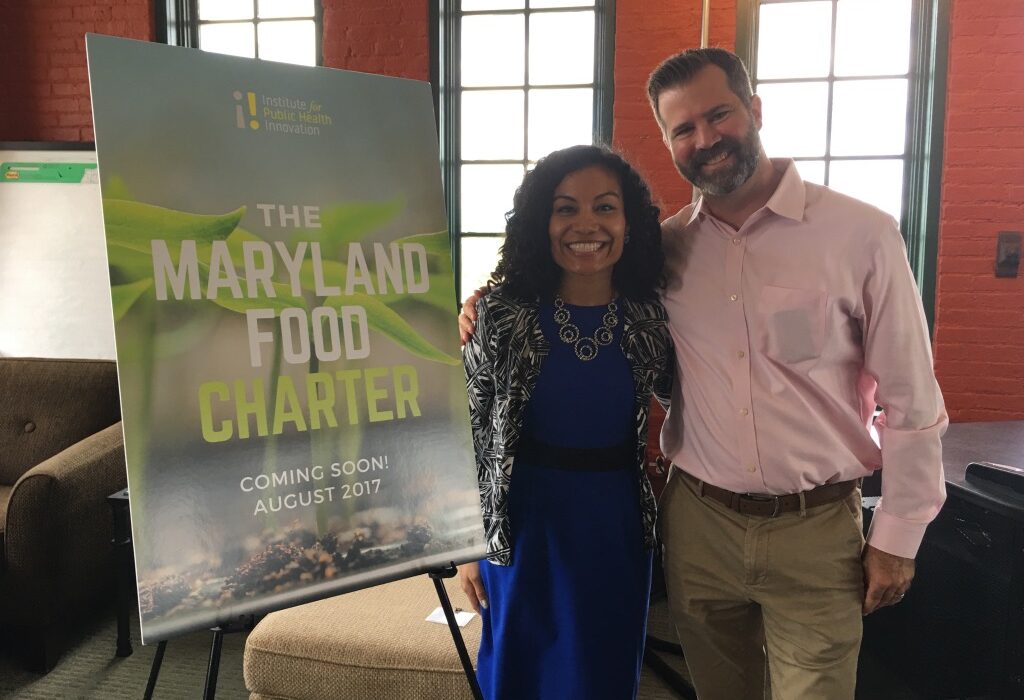
IPHI Hosts Maryland’s First Statewide Food Summit

IPHI hosted Maryland’s first statewide food summit, Developing a Maryland Food Charter: Statewide Summit, on October 15, 2015. The event included nearly 60 participants from all five regions of the state.


The summit focused on the following: 

  • The current status of potential food systems issues at the state-level
  • An overview of the outcomes and themes that arose at the regional convenings
  • Finalizing and prioritizing the strategies across the five food system domains included in the Maryland Food Charter

What is the change you want to see? 

A panel of experts answered this question from Grow & Fortify, Southern Maryland Agricultural Development Commission, Baltimore Office of Sustainability, Maryland State Department of Education, and Center for a Livable Future. Their perspectives guided the development of the Maryland Food Charter.

All summit participants refined and strengthened strategies that were included in the first-ever food charter. They also assessed the feasibility of the collective action strategies.

To view and download the Maryland Food Charter, click: here.


DC Healthy Housing Collaborative

A row of townhouses in Washington, D.C.

DC HEALTHY HOUSING COLLABORATIVE

The District of Columbia Healthy Housing Collaborative (DCHHC) is a multi-sector coalition addressing substandard housing conditions that contribute to significant health issues affecting District of Columbia residents.

DC Healthy Housing Collaborative logoThe DC Healthy Housing Collaborative (DCHHC) is a coalition of various organizations working together to improve the health of the District of Columbia (DC) residents by making sure their homes are safe and free of harmful exposures such as pests, mold, and lead.

Any home can have such problems, but houses in poor neighborhoods are far more likely to have chronic issues. In D.C., race, income, and neighborhood too often predict the potential for poor housing conditions that can lead to serious health problems. The DC Healthy Housing Collaborative (DCHHC) helps individuals and families take the steps needed to keep their homes safe.

IPHI serves as a backbone organization to help provide infrastructure and administrative support (including financial and grants management, human resources, communications, etc.), which allows the teams to concentrate on specific missions as service providers or mining resources for their audience.

To stay updated with the DCHHC’s monthly meetings, updates, and newsletters, click: here.

To learn more about the DC Healthy Housing Collaborative, please contact Program Director Abby Charles at [email protected] or visit: www.dchealthyhousingcollaborative.org.